
Last updated October 16, 2026
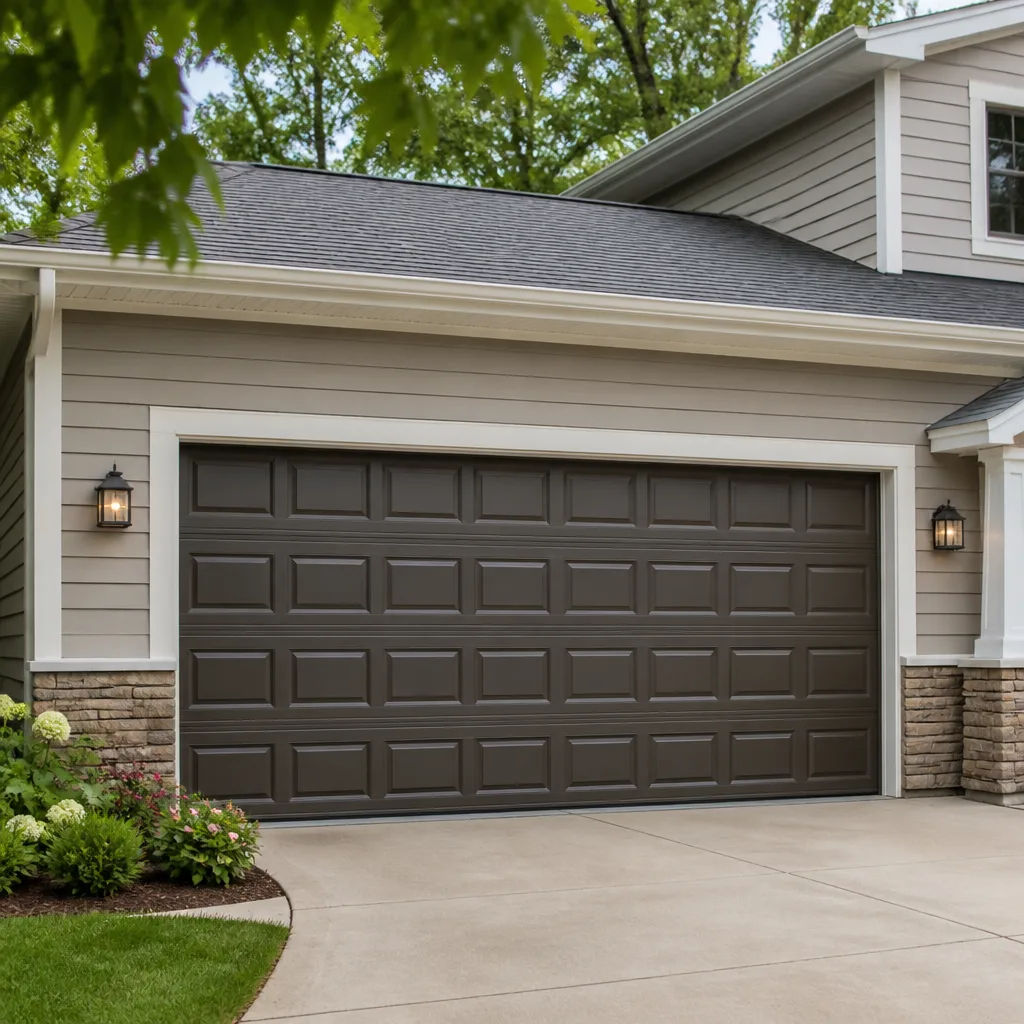 Raised-panel steel
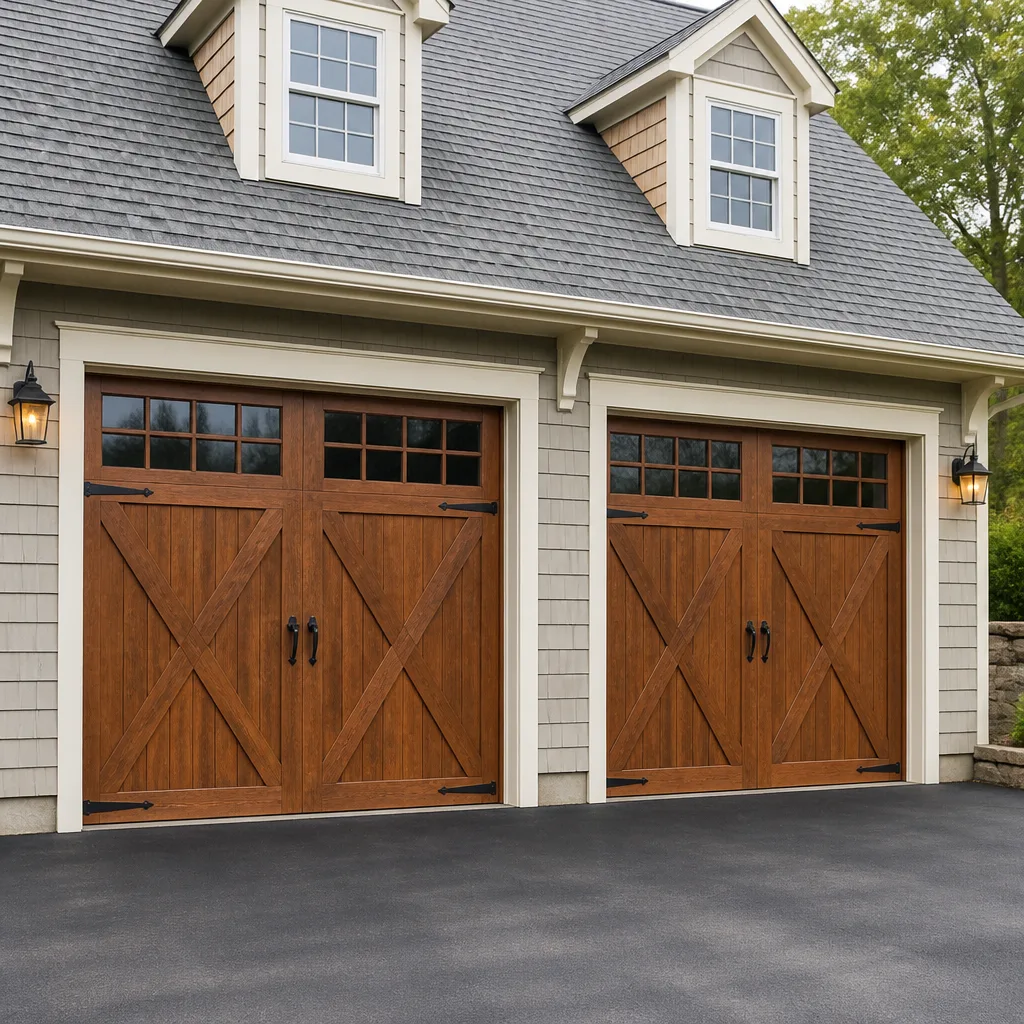 Carriage house
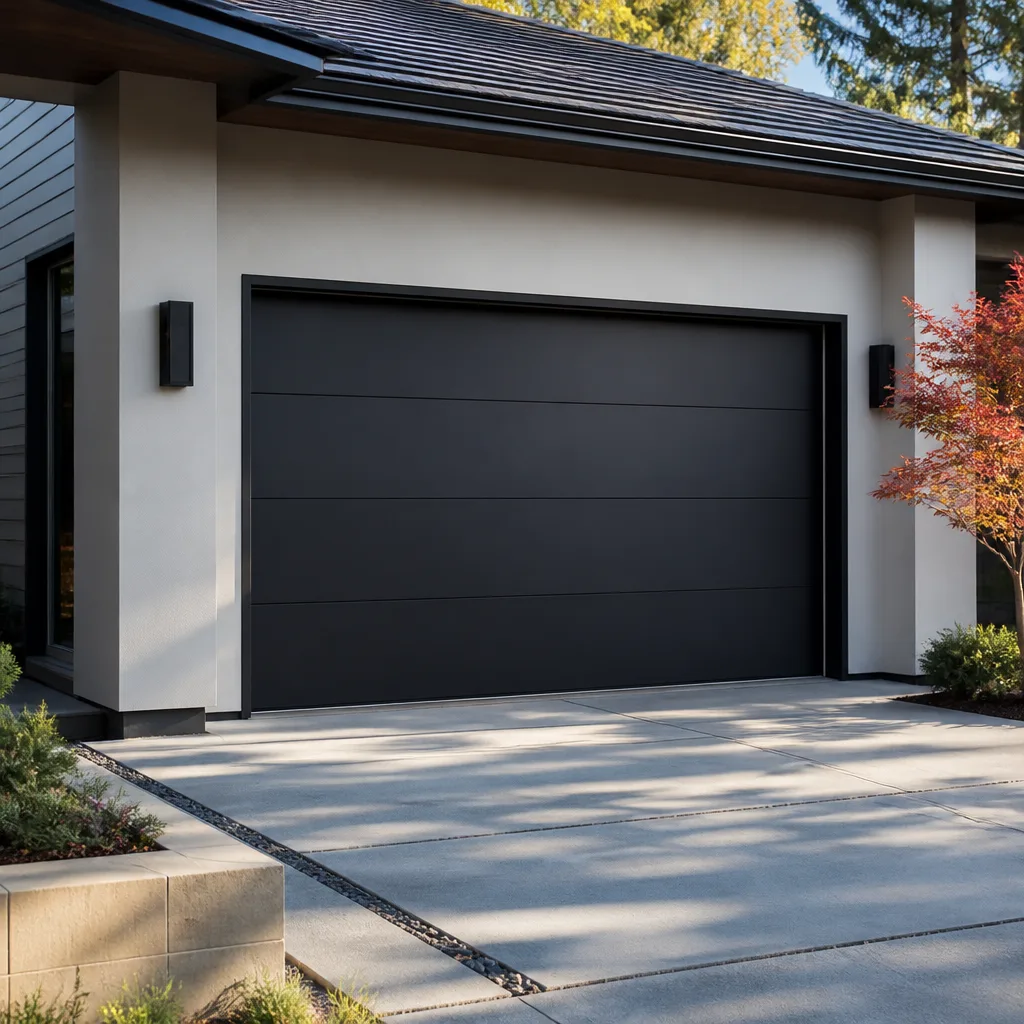 Modern flush
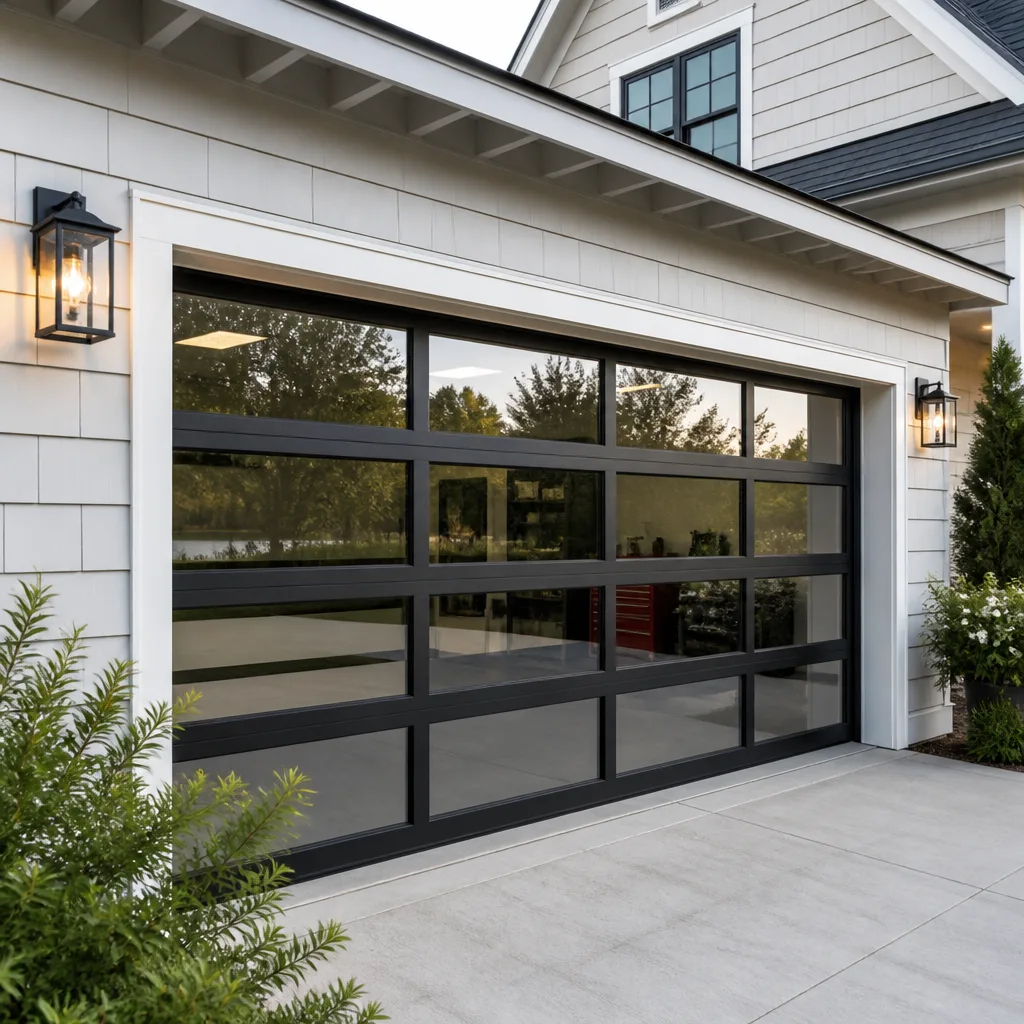 Full-view glass
 LiftMaster openers
 Chamberlain openers
Full 25-point door and opener safety check with every visit - springs, cables, rollers, tracks, and your LiftMaster or Chamberlain opener included
You get a price before we start. It does not change when the truck arrives.
Get your free estimateGarage Door Permits, Codes & Inspections in TX: What You Need to Know
A homeowner in Stone Oak lost $4,200 in a home sale negotiation because the buyer’s inspector flagged a garage door opener installation done without an electrical permit. The work itself cost $280 and the permit would have cost $35. By the time the inspector found it, the permit window had closed and clearing the violation required a licensed electrician’s sign-off, plus a retroactive permit fee, plus a concession at the closing table. This guide explains exactly when a garage door project requires a permit in San Antonio and Bexar County, when it genuinely doesn’t, and how to protect yourself from that Stone Oak scenario. For garage door warning signs every San Antonio homeowner should know, see our dedicated reference.
Quick Answer
In San Antonio, a like-for-like garage door replacement on the same opening with no structural or electrical changes typically requires no permit. A permit IS required when you alter the opening size, add or modify electrical circuits (including most new opener installations), or install a door on a new construction project. In unincorporated Bexar County, the rules differ from city limits and are often stricter. When in doubt, call the City of San Antonio Development Services Department at (806) 491-1594 and ask about your specific address before any work begins.
Styles & brands we work with
Table of Contents
- When San Antonio Requires a Garage Door Permit
- The Like-for-Like Exemption: What It Actually Covers
- Why New Garage Door Openers Almost Always Need an Electrical Permit
- City of San Antonio vs. Unincorporated Bexar County: Two Different Rulebooks
- Wind Load Ratings and the IBC/IRC Codes That Affect Bexar County Doors
- What a Final Inspection Actually Means for a Garage Door Install
- Unpermitted Garage Work: How It Shows Up, What It Costs, and How to Fix It
- Which Contractors Must Pull Permits Under Texas Occupation Code
When San Antonio Requires a Garage Door Permit
The City of San Antonio Development Services Department handles residential permits. For garage doors, the threshold question is always the same: are you changing the structure, the electrical system, or just swapping a fixture?
Here’s the plain version. If your existing garage door is being removed and a new door is installed in the same rough opening, and no wiring is touched, and the header and framing are not modified, you’re doing what code officials call a “like-for-like replacement.” In San Antonio, that generally does not require a permit. The door itself is considered a fixture, not a structural element.
But the permit requirement kicks in fast once you cross certain lines:
- Changing the opening size: If you’re widening the rough opening, raising the header, or converting a single door to a double door, you need a permit and a structural review. The header above the opening carries roof and wall load. Altering it without engineering sign-off is genuinely dangerous.
- New construction or additions: Any garage door on a new build, an addition, or a garage conversion requires a permit as part of the broader building permit for that project.
- Adding or moving electrical: New garage door opener installation typically involves either extending an existing circuit or adding a new one. That triggers an electrical permit, even if the door itself is permit-exempt.
- Siding or structural repair around the opening: If the jambs, sill, or header require replacement due to rot or termite damage, the repair work falls under residential building permits, not the door replacement itself.
In our experience servicing San Antonio homes since 2001, maybe one in ten garage door projects we quote actually crosses the permit line. Most are like-for-like replacements. But the ones that cross it tend to go unnoticed by undereducated contractors, not by educated homeowners who’ve read our step-by-step guide to hiring a garage door contractor in San Antonio. The penalty for guessing wrong shows up years later, during a sale or a claim, which is exactly what happened in Stone Oak.
If you’re planning a garage door repair in San Antonio that involves more than a bolt-on replacement, start with a quick call to the Development Services Department. Tell them your address and what’s being done. They’ll tell you whether a permit applies. It takes five minutes and costs nothing.
The Like-for-Like Exemption: What It Actually Covers
The like-for-like exemption is the most misunderstood rule in Texas garage door permitting. It’s simple in principle but full of traps in practice.
What “like-for-like” means to the City of San Antonio:
- The new door fits in the same rough opening with no structural changes
- The door’s overall size, weight class, and track configuration are functionally equivalent to the old door (a standard 16×7 steel door replacing a standard 16×7 steel door qualifies; swapping wood for steel of similar weight typically does too)
- No electrical work is performed (existing opener is reused or none is installed)
- The old door’s mounting points, brackets, and reinforcement are reused or replaced in kind
- The work is done on an existing, permitted structure (the original garage was built with permits or predates modern permitting)
What “like-for-like” does NOT cover, even though contractors sometimes claim otherwise:
- Going from a non-insulated to a heavily insulated door with a significantly different weight (this changes spring requirements, which changes loads on the framing)
- Converting from a tilt-up one-piece door to a sectional roll-up door (entirely different track and spring systems, different mounting points)
- Adding a second opener where none existed before (new circuit, new outlet)
- Replacing a wood door with a steel door on a home in a historic district (historic overlay rules may require separate review)
- Any door replacement where the header shows signs of sagging or damage (the structural issue must be addressed first, and that work requires a permit)
Here’s the part most guides miss. The like-for-like exemption is not a law on a stone tablet. It’s a policy interpretation applied by the local building official. If that official determines your replacement is not functionally equivalent to the original, they can require a permit retroactively. That’s rare, but it happens most often with oversized doors on custom homes in areas like Stone Oak, Alamo Ranch, and Timberwood Park, where door sizes are non-standard and replacements often come from custom manufacturers like Clopay or Amarr.
We start every garage door installation in San Antonio by checking these thresholds. It’s cheaper to pull a $50 permit upfront than to negotiate a $4,000 concession at a closing table later.
Why New Garage Door Openers Almost Always Need an Electrical Permit
This is the single biggest gotcha in the entire genre. A homeowner in Stone Oak lost $4,200 on a $280 garage door opener job because the person who installed it never pulled an electrical permit. Not the door. The opener. The outlet and circuit that power it.
Here’s the rule under the National Electrical Code as adopted by the City of San Antonio: any new electrical circuit, and most modifications to existing circuits, requires a permit. A garage door opener is a motorized appliance that draws 120 volts. If your garage doesn’t already have a ceiling outlet in the right location, installing a new opener means running new wire, adding a junction box, and potentially adding a new breaker. That’s an electrical permit, full stop.
Even when a ceiling outlet exists, certain changes trigger the requirement:
- Raising or relocating the outlet: Many older San Antonio garages have the outlet mounted on the side wall, not the ceiling. Moving it to the ceiling requires modifying the branch circuit.
- Adding a dedicated circuit: Older garage outlets often share a circuit with other outlets or lights. If the opener draws too much current (true for high-torque or smart-enabled units), a dedicated circuit may be required, which is new electrical work.
- Installing battery backup or smart hub wiring: Some newer Genie and Chamberlain opener models include battery backup chargers that require their own small circuit or at least a switched outlet. That’s still electrical modification.
Numbered walkthrough: How to check if your opener installation needs an electrical permit
- Look at your garage ceiling. Is there an outlet within 3 feet of where the new opener will mount? If yes, move to step 2. If no, you need a permit.
- Check your breaker panel. Is the garage outlet circuit labeled? Is it shared with other rooms, or dedicated? Shared circuits often still work but may not meet current code for a motor load, and adding a dedicated circuit is a permit job.
- Confirm the opener is a like-for-like replacement. If you’re replacing an old opener with a new one at the same location using the same outlet, no permit is required for electrical work. If you’re adding a second opener, a smart hub, or a battery backup, assume you need one.
- Call the city. The Development Services Department can confirm in minutes whether your specific address and scope requires a permit. In our experience, about half of “obvious” cases turn out to have a wrinkle.
For garage door opener repair in San Antonio, the answer is usually simpler. Replacing a circuit board, a gear, a limit switch, or a capacitor is a repair on an existing, permitted appliance and does not require an electrical permit. Only the installation of new opener hardware is the trigger.
City of San Antonio vs. Unincorporated Bexar County: Two Different Rulebooks
San Antonio city limits cover a large portion of Bexar County, but much of the county remains unincorporated. That includes significant residential areas along Highway 281 north of Loop 1604, parts of the I-10 west corridor beyond Fair Oaks Ranch, and scattered pockets south of Loop 410. If you live in an unincorporated area, the city’s rules do not apply to you. A different rulebook does.
How to find out which jurisdiction governs your address:
- Check your property tax bill. Look at the jurisdiction name. If it says “City of San Antonio,” you’re in city limits. If it says “Bexar County” as your municipality, you’re unincorporated.
- Use the Bexar County Appraisal District property search. Type in your address and confirm the taxing jurisdiction.
- Check your 911 address format. Many unincorporated areas use rural route or older street numbering formats, though this isn’t foolproof.
- Ask us when you call. We check jurisdiction on every job we quote, because the answer changes the price, the schedule, and the paperwork.
What’s different in unincorporated Bexar County:
- No unified building department. Bexar County does not have a county-wide residential building code enforcement office equivalent to the City of San Antonio’s Development Services Department. Instead, unincorporated areas rely on a patchwork of rules from the county, the state, and sometimes the federal government if you’re in a floodplain.
- Windstorm requirements can be stricter. Unincorporated Bexar County is generally not in the designated Texas Windstorm Insurance Association (TWIA) catastrophe zone, but certain structures still face state-level wind load requirements under the Texas Department of Insurance. New builds, not like-for-like replacements, are most affected.
- Septic and drainage matter more than structural permits. The county cares about septic, drainage, and floodplain management. A garage door itself rarely triggers county review, but if you’re converting a carport to an enclosed garage in an unincorporated area, the impervious cover and drainage changes can trigger county involvement even where no city permit would apply.
- Home sale inspections often default to San Antonio standards anyway. Buyers’ inspectors frequently cite City of San Antonio code even on unincorporated properties, because most inspectors work city standards as their baseline. This is how unpermitted work in the county causes sale problems later.
In short: inside city limits, the question is “Did you follow San Antonio’s rules?” Outside city limits, the question is “Can you prove it was done to a standard a buyer’s inspector will accept?” Those are very different questions, and the second one is much harder to answer after the fact.
Wind Load Ratings and the IBC/IRC Codes That Affect Bexar County Doors
San Antonio sits at the edge of Texas’ thunderstorm and tornado corridor. Severe straight-line winds happen every year, and the codes reflect that reality. The relevant standards come from the International Building Code (IBC) and the International Residential Code (IRC), as adopted by the City of San Antonio and applied in Bexar County.
The specific code sections that apply to garage doors:
- IRC Section R309.1: Garage door openings must be protected from fire spread when the garage is attached to dwelling space. This mostly affects doors on the wall shared with living space.
- IRC Section R309.2: Garage doors must be equipped with a secondary safety device, which in practice means the auto-reverse feature and photoelectric sensors mandated by federal law.
- IRC Section R612: Windborne debris protection. For homes in wind speed zones of 140 mph or higher, garage doors must be wind-load rated and labeled for that rating. Most of Bexar County falls into the 130-140 mph range, where wind-rated doors are recommended but not always mandatory.
- IBC Section 1609: The structure supporting the garage door (header, jambs, mounting brackets) must resist the design wind load for the home’s location.
What this means in plain English: your garage door is the largest single opening in your home’s exterior wall. During a windstorm, pressure differentials can blow the door inward or outward, and once the door fails, the roof often fails next because the pressure enters the house. Wind-rated doors from manufacturers like Wayne Dalton and Amarr are engineered to resist those forces and are labeled with their design pressure rating.
Why this matters for insurance claims:
After a severe windstorm, an insurance adjuster will check whether the damaged door met the wind load requirements for your address. If the door was installed without permits and the adjuster determines the door was not wind-rated for your zone, the claim can be reduced or denied. If the door was installed with permits and the final inspection is on record, the claim process is dramatically simpler. This is one of the hidden financial costs of unpermitted work that no one thinks about until the roof is in the driveway.
What a Final Inspection Actually Means for a Garage Door Install
When a garage door project does require a permit, the permit isn’t complete until a final inspection is passed and signed off. That inspection is not a formality. Here’s what the inspector actually checks, step by step.
Numbered walkthrough: What happens during a final inspection for a permitted garage door install
- Documentation review. The inspector verifies the permit number matches the address and the work described. Discrepancies stop the inspection immediately.
- Structural check. The inspector examines the header, jambs, and mounting brackets. They check that the door’s weight is properly supported and that no structural members were altered without approval.
- Electrical check. If an opener is part of the project, the inspector verifies the circuit, the outlet, and the disconnect requirements. Ground fault protection, arc fault protection, and breaker sizing are all reviewed.
- Safety device check. The auto-reverse mechanism is tested. The photoelectric sensors are tested. The force settings are tested. Federal law requires the door to reverse on contact with a 2×4 laid flat on the ground, and the inspector checks it.
- Wind load verification. If the door is wind-rated, the inspector confirms the label is present and legible and matches the permit documentation.
- Fire rating verification. For attached garages, the inspector confirms the door meets the fire separation requirements for the wall between garage and living space.
- Pickup of the final sign-off. The inspector files the passing report, and the permit is closed. This is the document you want to keep, because it’s what future buyers’ inspectors will ask for.
A contractor who pulls the permit legally owns the liability for that inspection. Under the Texas Occupations Code, the contractor of record is responsible for ensuring the work complies. That’s exactly why we pull permits on our own scope whenever one applies, and why we include the written price for any permit fees before work starts. No invoice surprises, ever.
Unpermitted Garage Work: How It Shows Up, What It Costs, and How to Fix It
Unpermitted work is invisible until it isn’t. Homeowners often discover an unpermitted garage door or opener when they’re trying to sell, refinance, or file an insurance claim. Here’s how it surfaces and what it costs.
How unpermitted work gets discovered:
- Home sale inspections. A buyer’s inspector compares the condition of the property against the seller’s disclosure and the city’s permit history. If the garage door opener was installed in 2019 and no electrical permit exists for that address, the inspector flags it.
- Insurance claims. After storm damage, the adjuster pulls permit records. If the damaged door was installed without a permit, the adjuster has grounds to deny the claim or reduce the payout.
- Appraisal districts. Bexar Appraisal District records can show when a garage was enclosed, converted, or expanded. If the assessment shows an improvement that has no corresponding permit, a title company may flag it during closing.
- Neighbor complaints. Less common, but a nosy neighbor with a grudge and a phone can trigger a code enforcement visit.
What retroactive compliance costs:
- Retroactive permit fees: Typically double the original permit cost. A $35 electrical permit becomes $70 plus processing fees.
- Licensed electrician sign-off: If the electrical work was done by an unlicensed person, a licensed electrician must inspect and certify it before the permit can be issued. This typically costs $150 to $400.
- Possessory re-inspection fees: $75 to $200 depending on the scope.
- Home sale concessions: This is the big one. The Stone Oak homeowner lost $4,200. In some San Antonio neighborhoods, unpermitted garage work has cost sellers $2,000 to $8,000 in concessions, repairs, and delayed closings.
Numbered walkthrough: The fastest path to retroactive compliance
- Determine the scope of the unpermitted work. Was it just an opener circuit? A full door replacement? A structural change? Each has a different remediation path.
- Hire a licensed electrician or contractor. Under Texas law, an unlicensed person cannot certify unpermitted work. You need a license holder to evaluate and sign off.
- File for a retroactive permit. The Development Services Department has a process for after-the-fact permits. You’ll pay the retroactive fee, and the work will be inspected.
- Correct any deficiencies. If the original work doesn’t meet current code, it must be brought up to code before the permit is approved. This is the most expensive part.
- Study the final sign-off. Keep the closed permit document with your home records. It’s what future buyers and insurers will ask for.
We’ve helped San Antonio homeowners navigate retroactive compliance, and the honest summary is this: it’s always cheaper and faster to pull the permit upfront. Every time.
Which Contractors Must Pull Permits Under Texas Occupation Code
Texas law is specific about who must be licensed and who must pull permits. Not every garage door company is equal under the law, and not every contractor is legally allowed to do every type of work.
Who needs a license:
- Electricians. Any electrical work, including wiring for a new garage door opener circuit, must be performed by a licensed electrician under the Texas Electrical Safety and Licensing Act. No exceptions.
- General contractors doing structural work. If the header, jambs, or opening size are being modified, the work must be done by a contractor licensed under the Texas Occupations Code for residential construction, or by a homeowner who pulls an owner-builder permit (with all the liability that entails).
- Garage door installers doing like-for-like replacements. A specific garage door installer’s license is not required by the state of Texas for like-for-like fixture replacements. However, any contractor performing the work should carry general liability insurance and should be able to prove it. We carry it and we show it.
Who pulls the permit:
- Electrical permits: Pulled by the licensed electrician doing the work. The electrician’s license number goes on the permit.
- Building permits for structural changes: Pulled by the general contractor or the homeowner under an owner-builder declaration.
- No permit at all: Like-for-like replacement with no electrical and no structural changes. This is the majority of garage door jobs in San Antonio.
The key distinction for homeowners: the person who pulls the permit owns the liability. If a contractor tells you “you don’t need a permit” and you later discover you did, the contractor typically faces no consequences. You, the homeowner, face the sale negotiation, the insurance claim denial, and the retroactive compliance costs. This is why we put every permit decision in writing and explain the reasoning before any work starts.
Common Mistakes to Avoid
- Assuming every garage door job needs a permit. Most like-for-like replacements in San Antonio don’t. Pulling a permit when one isn’t needed wastes time and money, and some owners do it out of overcaution. Call the city and ask.
- Assuming no garage door job ever needs a permit. The opposite error is worse. New openers with new circuits, structural changes, and new construction all require permits, and missing them creates liability you won’t see until it’s too expensive to fix.
- Trusting a contractor who says “don’t worry about it.” The contractor doesn’t own the liability. You do. If a San Antonio contractor brushes off the permit question, find out why or find another contractor.
- Doing your own electrical work on an opener circuit. This is how the Stone Oak scenario happens. A handyman installs the opener, runs a new circuit, and you discover three years later that the work was never permitted and the person who did it is unreachable.
- Ignoring the city vs. county distinction. The rules are different inside San Antonio city limits than in unincorporated Bexar County. A rule that applies to your neighbor in Stone Oak may not apply to your cousin off Highway 281 outside the city limits, and vice versa.
- Losing the final inspection paperwork. The closed permit is your proof. It belongs in a file folder with your deed and your insurance policy. Future buyers and adjusters will ask for it.
- Skipping the wind load check on a high-end door. If you’re spending $3,000 or $4,000 on a custom door from Clopay or Amarr in a high-wind area, verify the wind rating matches your address before you buy. The wrong rating can void the warranty and complicate an insurance claim.
See the difference
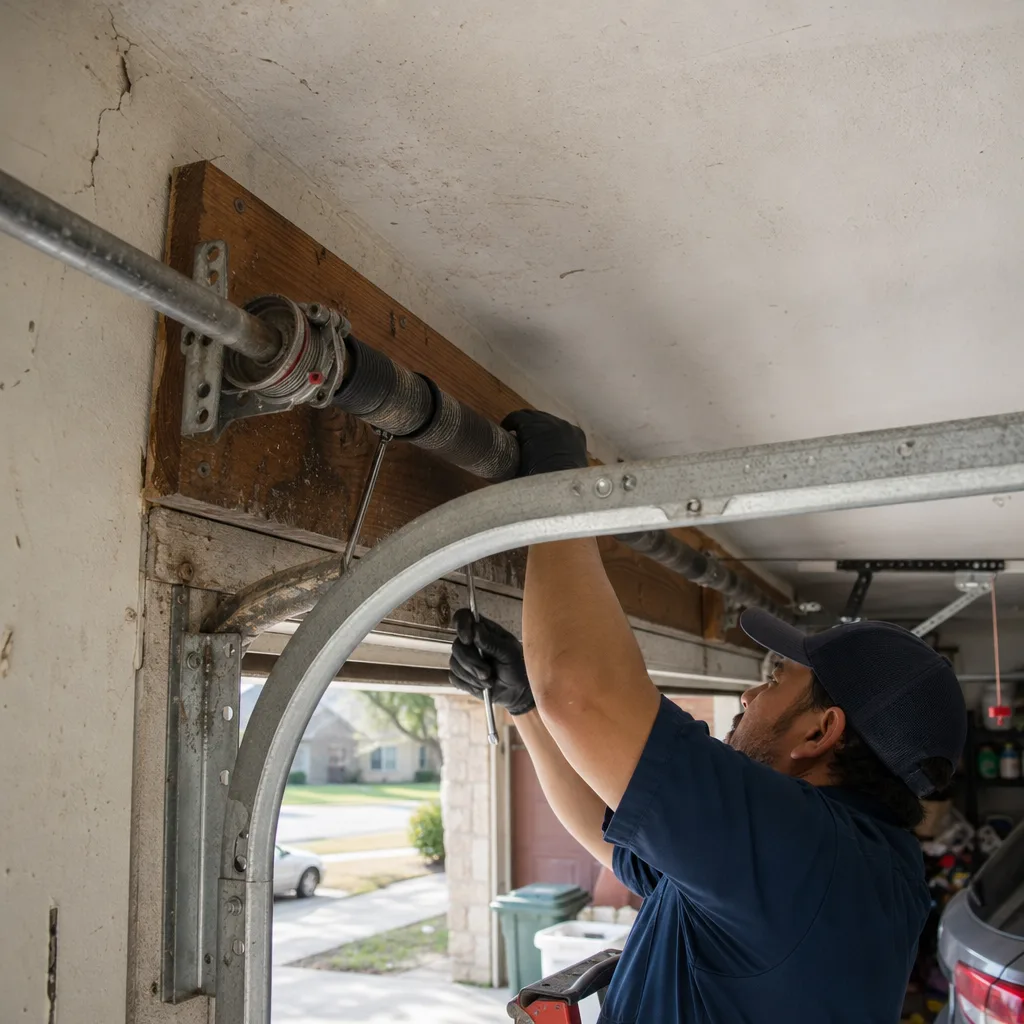 Before
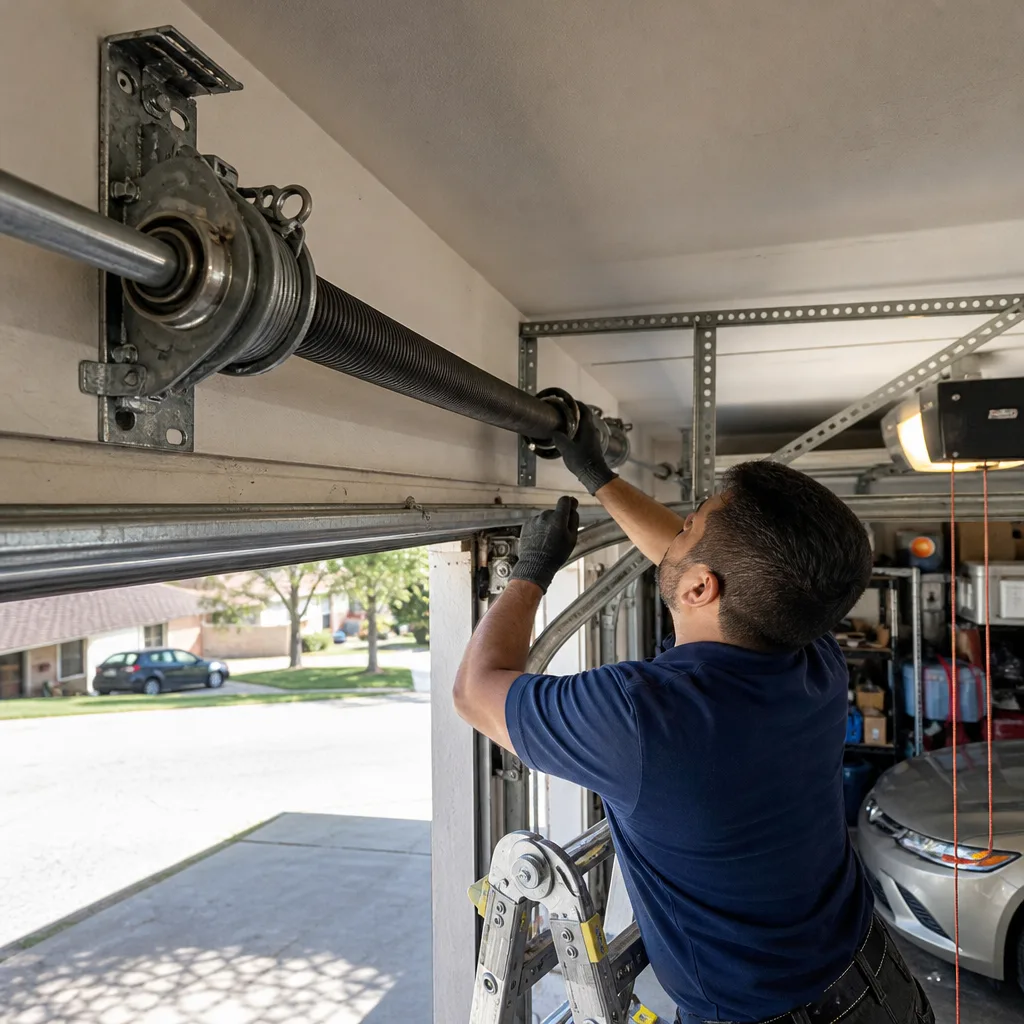 After
After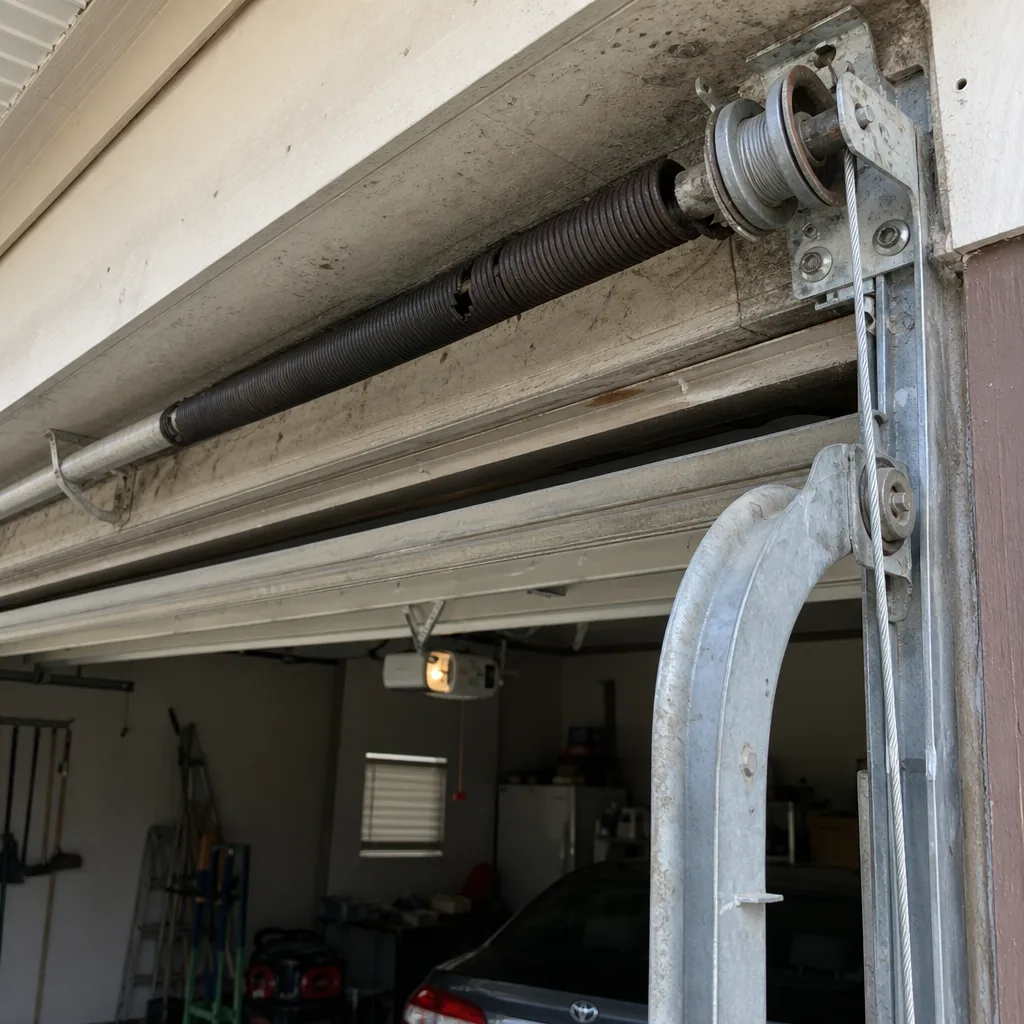 Before
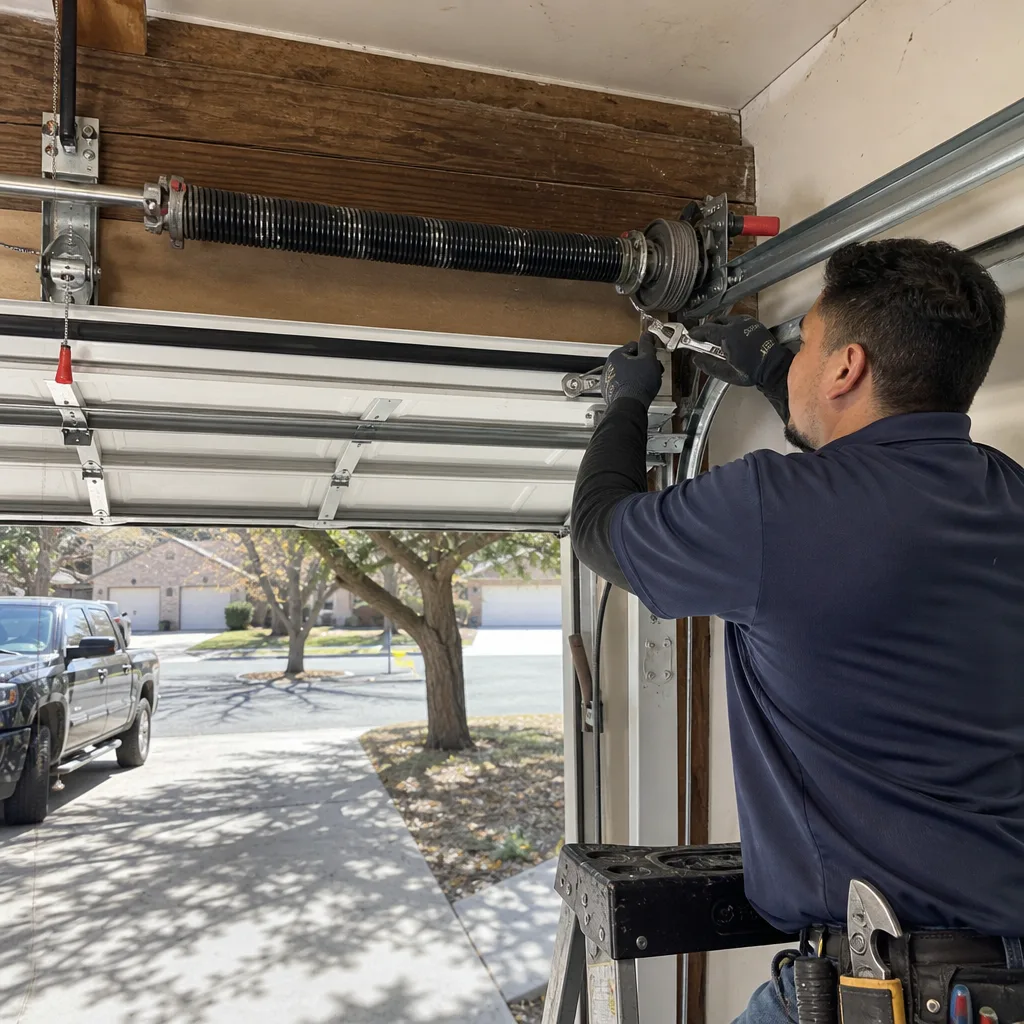 After
After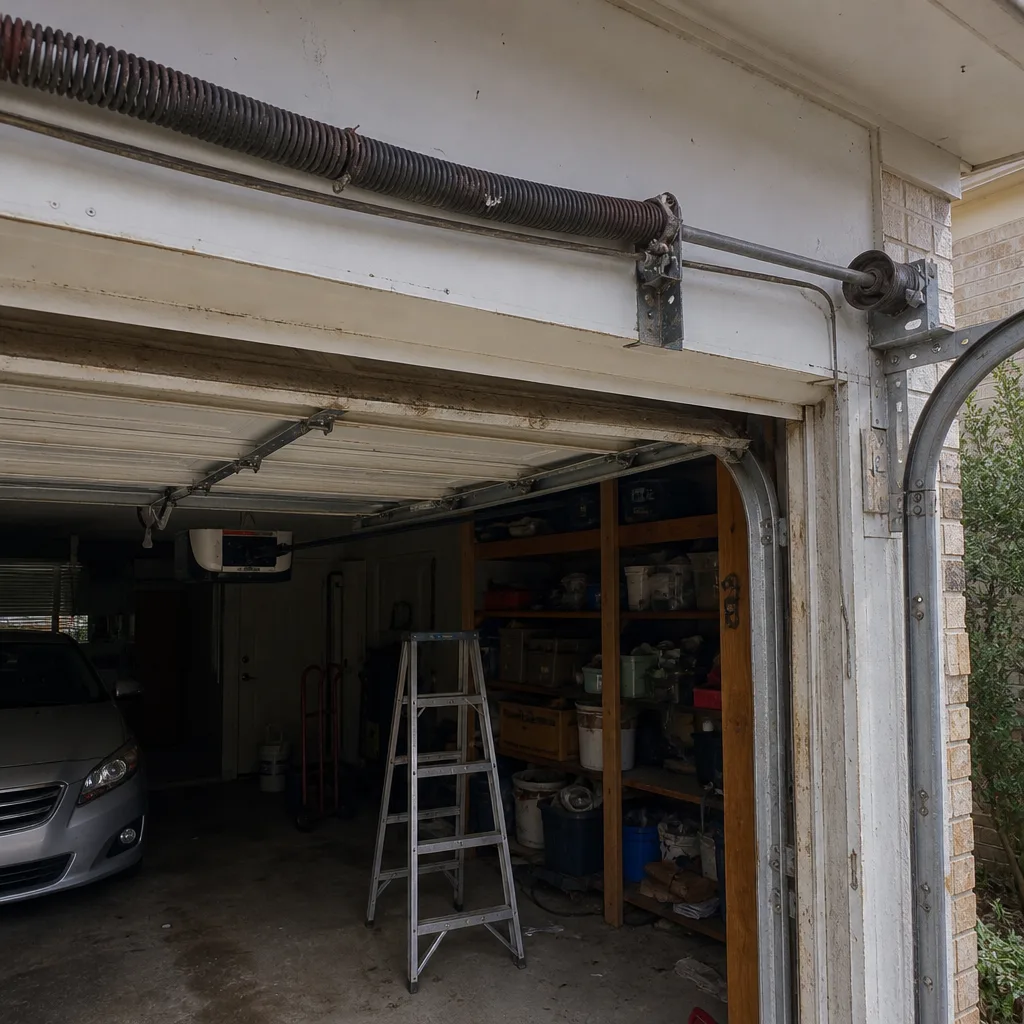 Before
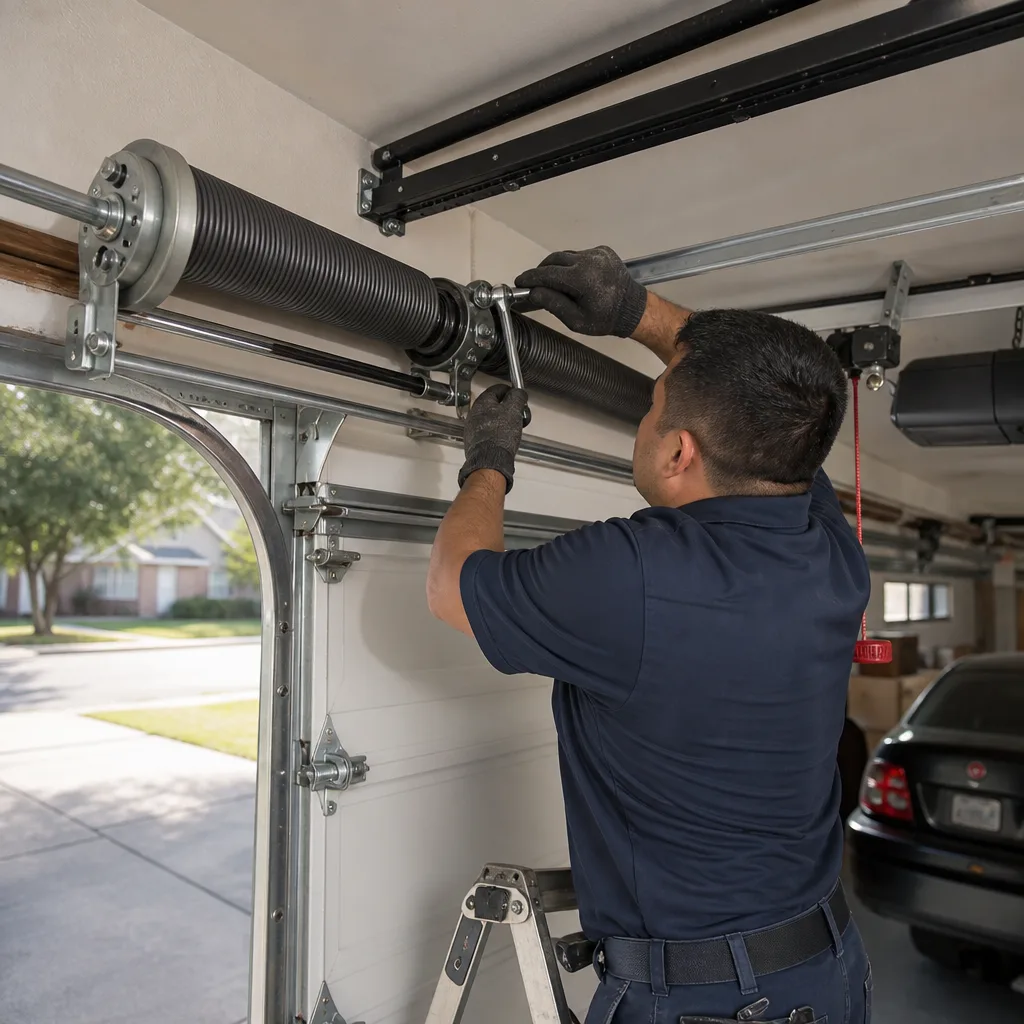 After
AfterWhen to Call a Professional
Call a professional whenever the permit question is unclear, whenever electrical work is involved, or whenever structural changes to the opening are being considered. Specifically, call if you’re installing a new opener and your garage lacks a ceiling outlet; if you’re changing your door size or converting a carport to a garage; if you’ve discovered unpermitted work from a previous owner and need a path to compliance; and if you’re planning a door replacement in an area with high wind exposure. Doyle Garage Doors San Antonio offers free estimates in San Antonio and checks permit requirements on every job we quote. Call (806) 491-1594 and we’ll walk you through your specific address, scope, and jurisdiction before you spend a dollar.
Frequently Asked Questions
No, if it’s a like-for-like replacement with no electrical or structural changes. Yes, if you’re modifying the opening, adding new electrical work, or installing on new construction. Call the City of San Antonio Development Services Department at (806) 491-1594 to confirm for your specific address, or call us at (806) 491-1594 and we’ll check as part of a free estimate.
Yes, in most cases, if a new circuit or outlet is being added. Replacing an old opener at the same location using the same outlet typically requires no permit, but installing a second opener or running new wire almost always does. The permit is pulled by a licensed electrician under the Texas Electrical Safety and Licensing Act.
The buyer’s inspector will flag the unpermitted electrical work during the inspection, and the buyer will likely demand a credit, a repair, or both. In San Antonio, unpermitted garage and electrical work has cost sellers $2,000 to $8,000 in concessions. The buyer may also require retroactive compliance before closing, which adds weeks to the timeline.
Yes. City of San Antonio rules apply only inside city limits. In unincorporated Bexar County, there is no equivalent to the city’s Development Services Department for most residential garage door work, but buyers’ inspectors often apply San Antonio standards anyway, so unpermitted work in the county still becomes a sale problem later.
A simple electrical permit for an opener circuit often takes 1 to 3 business days. A structural permit for opening modification can take 1 to 2 weeks depending on review workload. Retroactive permits take longer because they require additional review and possibly a licensed contractor’s sign-off.
Yes, under an owner-builder declaration, a homeowner can pull a permit for work on their own primary residence. However, electrical work still requires a licensed electrician, and the owner-builder assumes all liability for code compliance. This path is cheaper upfront but riskier if you don’t know the codes.
The Bottom Line
Most garage door replacements in San Antonio don’t need a permit. A significant minority do, and the difference between the two comes down to electrical work and structural changes. The risks of guessing wrong are severe: unpermitted work surfaces during home sales, insurance claims, and refinancing, and it always costs far more to fix retroactively than it would have cost to permit upfront. Check your jurisdiction, check your scope, and if a permit applies, pull it before the work begins. Keep the final inspection document. It’s the cheapest insurance you’ll ever buy in the garage. For more guides & resources on protecting your home, visit our blog.
Written by Aaron Teague, Owner at Doyle Garage Doors San Antonio, serving San Antonio since 2001.