
Last updated October 16, 2026
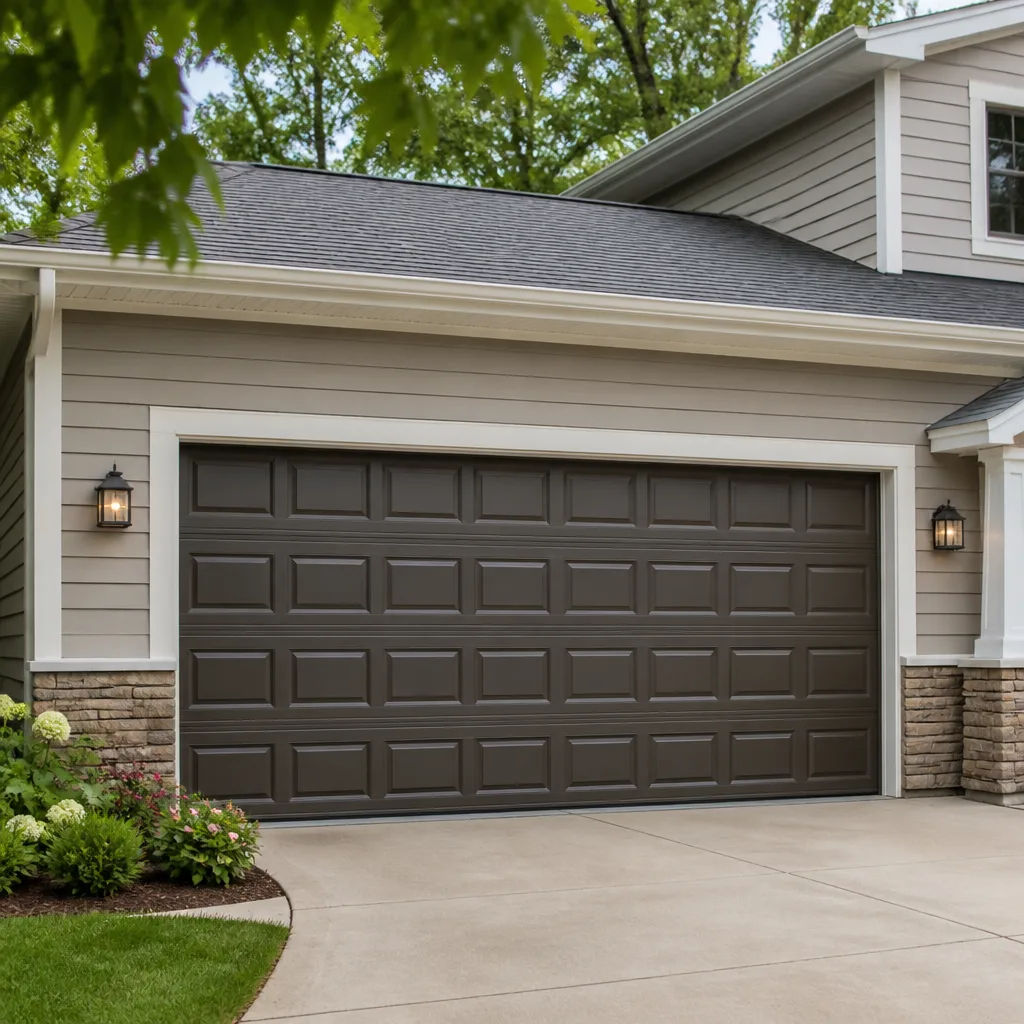 Raised-panel steel
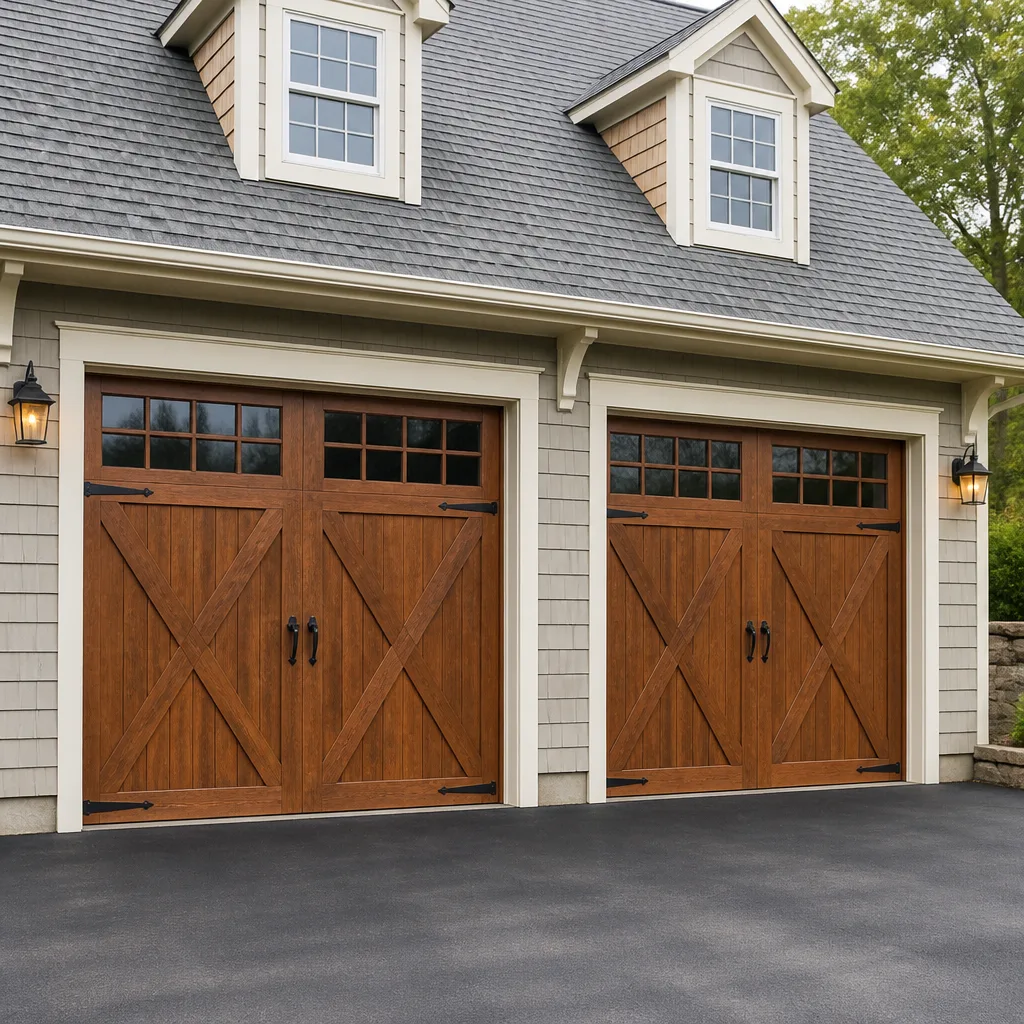 Carriage house
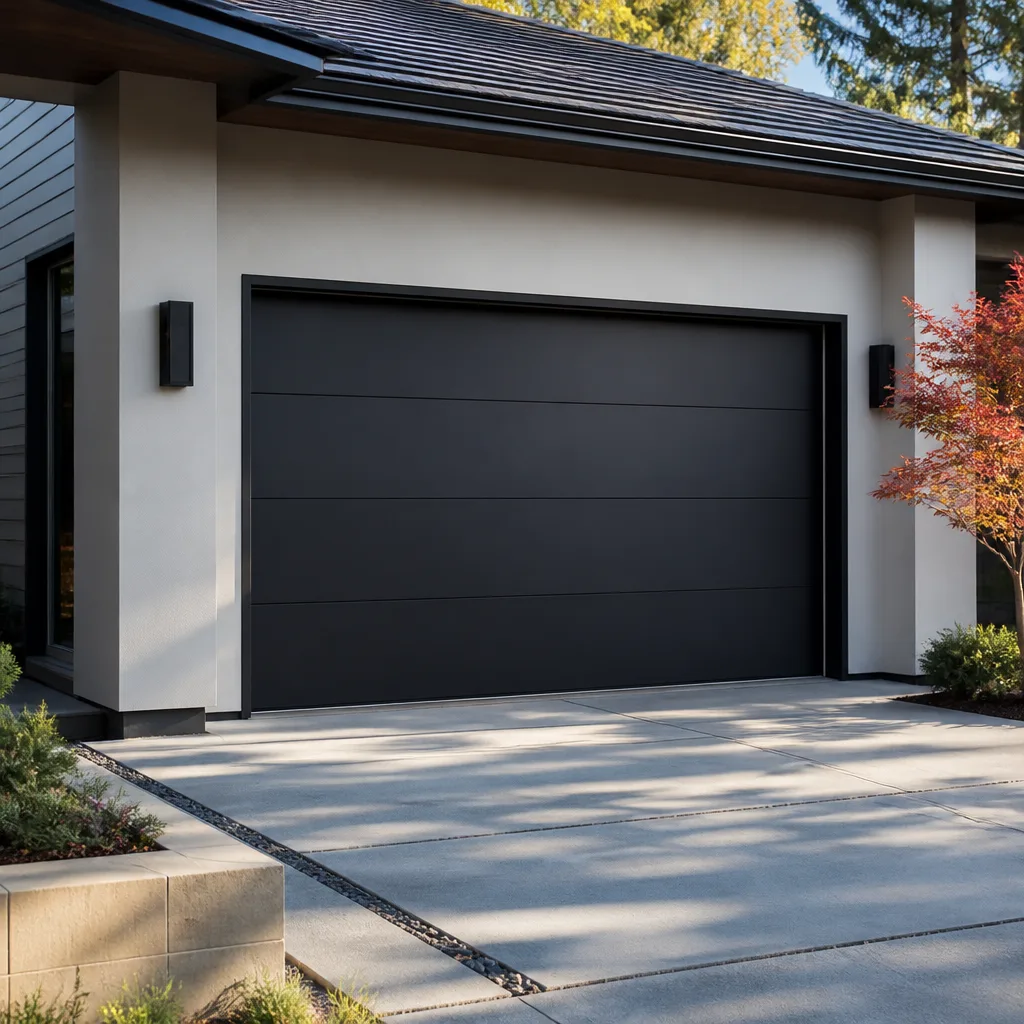 Modern flush
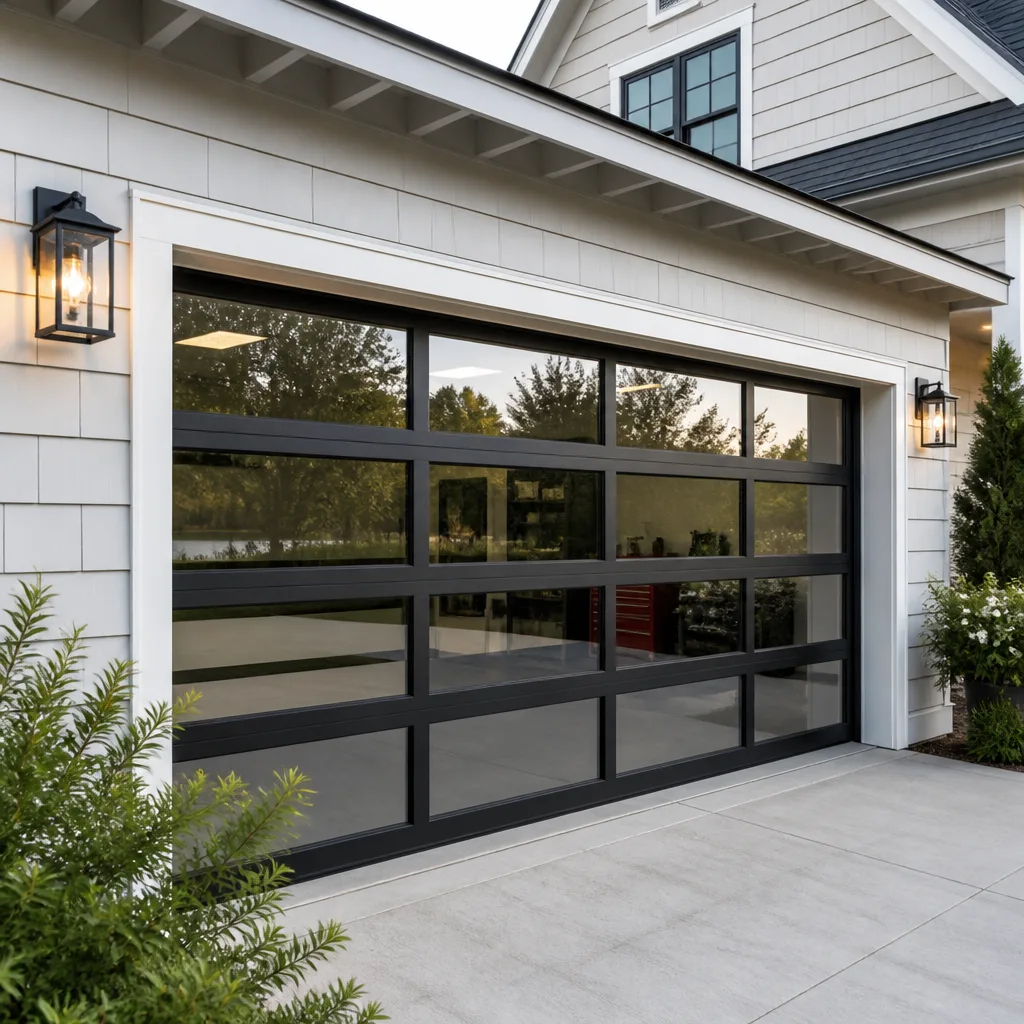 Full-view glass
 LiftMaster openers
 Chamberlain openers
Full 25-point door and opener safety check with every visit - springs, cables, rollers, tracks, and your LiftMaster or Chamberlain opener included
You get a price before we start. It does not change when the truck arrives.
Get your free estimateGarage Door Warning Signs: A San Antonio Homeowner’s Reference Guide
A torsion spring above a standard two-car garage door holds roughly 100 pounds of stored tension. When it snaps, and in San Antonio’s heat cycle environment it will eventually snap, it releases that energy in a fraction of a second with a sound residents routinely describe as a gunshot. We have never replaced a snapped spring that didn’t announce itself first. The door stuck, or creaked in a specific way, or hung slightly uneven for a month before the failure. This guide maps every warning sign to its mechanical cause so you can act on what you’re already noticing instead of waiting for the crisis that’s coming. For The Complete Guide to Garage Door in San Antonio, see our broader resource.
Quick Answer
The most common garage door warning signs in San Antonio are a door that opens slower than seven seconds, a visible gap in a torsion spring coil, a loud bang followed by the door refusing to lift, cable fraying near the bottom roller bracket, and a door that drifts downward after closing. Any one of these means a component is actively failing and should be inspected. Call Garage Door Repair in San Antonio at (806) 491-1594 for a free estimate before a warning sign becomes an emergency.
Styles & brands we work with
Table of Contents
- The Seven-Second Lift Test
- Door Drift: When It Lowers On Its Own
- The Sound Taxonomy: What Your Door Is Saying
- Visual Signs on the Spring Itself
- Sensor Alignment Warning Signs
- Cable and Roller Wear Patterns
- Why San Antonio Heat Accelerates Failure
- Common Mistakes to Avoid
- When to Call a Professional
The Seven-Second Lift Test
A properly balanced garage door, regardless of brand or age, opens from fully closed to fully open in about seven seconds. Not exactly seven. But if you stand and count, a healthy door hits the open position right around the time you reach “seven.” A door that takes ten or twelve seconds, or hesitates halfway up and then crawls the rest of the way, is telling you something specific about which component is under stress. The location of the hesitation is the diagnostic clue.
Hesitation at the very start of travel, where the door seems to strain before moving, usually points to the torsion spring, the large coil mounted horizontally above the door that does most of the lifting. When a spring weakens, it loses the stored energy needed to counterbalance the door’s weight. The motor compensates by working harder, which slows the initial lift and eventually burns out the opener. Chamberlain and LiftMaster openers have built-in force settings that will trip and reverse the door when they detect excessive strain, which homeowners often misread as a sensor problem when it’s actually a spring losing tension.
Hesitation or stalling in the middle of travel typically points to the trolley carriage, the sliding mechanism on the opener rail that pulls the door along. When its internal gears wear, the carriage slips at the midpoint where load distribution changes. A door that hangs for two seconds mid-travel, then jerks forward, is almost always a trolley issue, not a motor issue. Here’s the seven-second test laid out:
- Stand inside the garage with the door fully closed.
- Press the wall button, not the remote, and start counting.
- Note exactly where any hesitation occurs: initial lift, midpoint, or final approach.
- If total open time exceeds seven seconds, note the door’s position when it slowed.
- Run the test twice. Consistent hesitation at the same point confirms a mechanical issue.
In our experience across San Antonio neighborhoods from Alamo Heights to Stone Oak, a door that creeps past ten seconds of open time has a spring that’s at least thirty days from failure, sometimes less. The fix at that stage is a spring replacement, typically $180 to $340 for a standard two-car door in San Antonio, far cheaper than the emergency call when it snaps at 7 a.m. on a workday with your car trapped inside. Visit our Doyle Garage Doors San Antonio home page to see how we approach repairs and upfront pricing.
Door Drift: When It Lowers On Its Own
Door drift is the symptom homeowners describe as “the door closes, then slowly drops a few inches on its own.” Sometimes it happens immediately after closing. Sometimes overnight, so they wake up to a door hanging lower than they left it. Either way, the mechanical story is the same, and it is almost never the motor.
Here’s what’s actually happening. Your garage door’s weight, typically 130 to 180 pounds for a standard double door, is counterbalanced by spring tension. When the springs are healthy, the door holds position at any point in its travel. When a spring weakens, it can no longer hold the door in place against gravity. The door creeps downward until the opener’s limit switch, the component that tells the motor when the door has reached “closed,” detects the change and triggers a correction. If you hear the motor run briefly for no apparent reason, that’s the opener re-setting the door to closed. It’s compensating for spring failure.
Drift is dangerous because it’s progressive. A quarter-inch drift becomes a two-inch drift within weeks as the spring continues to weaken. Once the spring loses enough tension, the door can drop quickly from the half-open position with enough force to injure a person or crush a pet. In San Antonio homes where garages open directly into kitchens or laundry rooms, a drifting door also creates a security risk: a door that doesn’t fully close is an invitation, and many residents in neighborhoods like Terrell Hills and Monte Vista have discovered this the hard way. If your door drifts and you can still open it, call (806) 491-1594 for an inspection. At Doyle Garage Doors San Antonio, your spring tension is checked on every call, written into the quote, and repaired only with your approval.
Drift is distinct from normal thermal movement. A door can shift a fraction of an inch when the temperature swings from a 45-degree February night to a 90-degree March afternoon, because the metal springs expand and contract. That’s normal. Drift measured in inches, or drift that triggers the motor to run, is not.
The Sound Taxonomy: What Your Door Is Saying
Garage doors make noise. Some of it is benign. Some of it is a specific component announcing its failure. The skill is knowing which is which, and San Antonio’s climate adds a wrinkle: temperature swings between air-conditioned garage interiors and 100-degree exterior heat create expansion and contraction noise that homeowners in more stable climates never hear. For seasonal garage door care for San Antonio, see our year-round homeowner’s guide. A taxonomy backed by two decades of service calls:
The Spring Creak (Usually Normal)
A low creak that occurs as the door opens or closes, consistent in volume and pitch, is typically thermal expansion. The spring coils heat up from ambient garage temperature, then cool down. The creak is the metal adjusting. If the creak has been present for years and hasn’t changed, it’s almost certainly normal. If it becomes louder or shifts to a metallic groan, that’s spring wear, not expansion.
The Cable Fray Squeal (Urgent)
A high-pitched squeal that occurs at the bottom of the door’s travel, where the lift cables attach to the roller brackets, means a cable strand has begun to separate. Lift cables are made of braided steel strands, and when one strand breaks, the frayed end scrapes against the cable drum with every cycle. This sound is urgent and unmistakable once described: it’s the sound of a wire brush dragged across metal. In San Antonio, where dust from construction and seasonal pollen accumulate on cables, we see this wear pattern accelerated. A cable that fails drops the entire weight of the door onto whatever is beneath it. If you hear this sound, stop using the door and call for service the same day.
The Roller Bearing Click (Replace Within 30 Days)
A rhythmic click or tick that follows the door’s travel speed, most audible as the door passes through the curved track section, is a roller bearing going bad. Rollers are small wheels that guide the door along its tracks, and each contains ball bearings that eventually dry out and crack. The click is the broken bearing fragment hitting the race. A roller that seizes entirely can wedge the door in its track, derailing it mid-travel. The sound is fixable for the cost of a roller replacement, typically $15 to $35 per roller installed, which is far less than the repair bill for a derailed door.
If you’re uncertain which sound you’re hearing, record it on your phone and play it back while standing next to the door. The location of the sound, bottom bracket vs. center spring vs. track curve, is usually clear on playback. Or call us. A real person answers at (806) 491-1594, day, night, weekends, and holidays, and can often identify the sound from a description alone.
Visual Signs on the Spring Itself
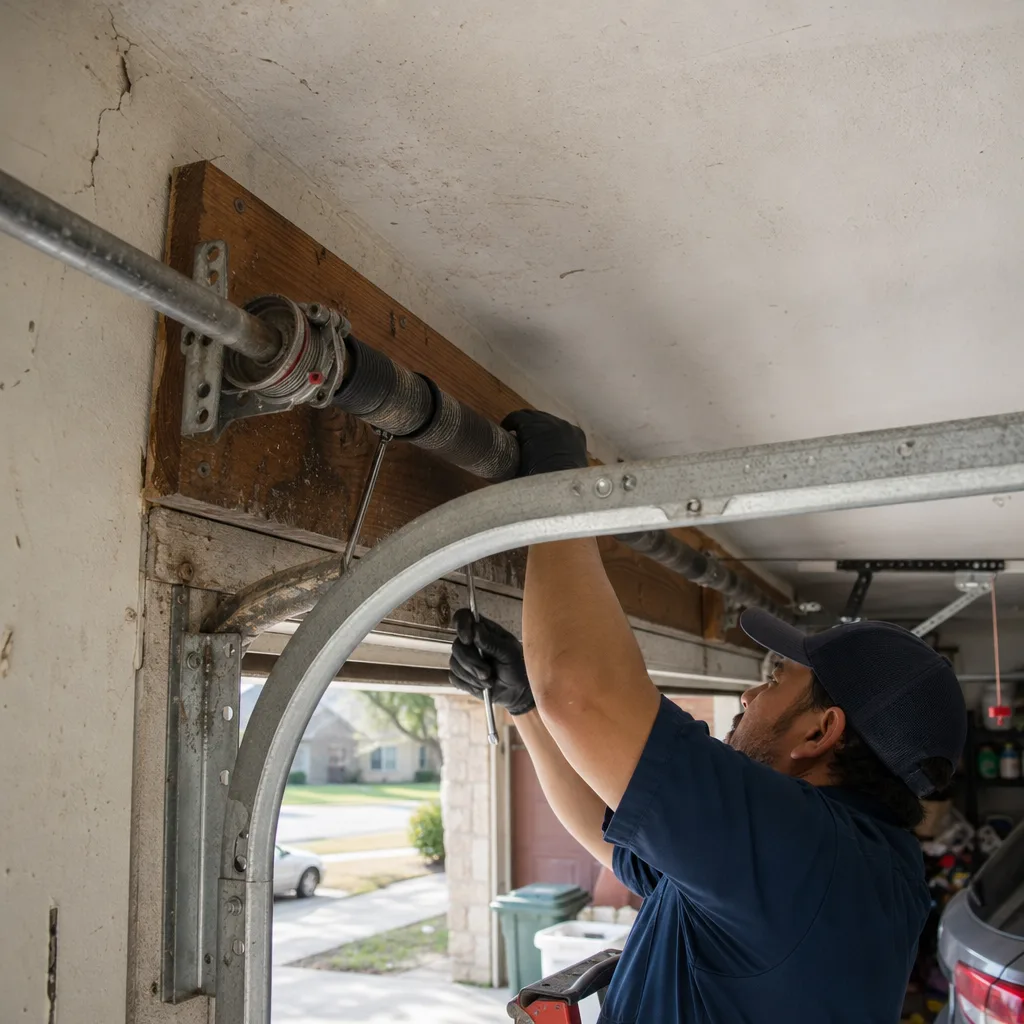
Torsion springs don’t hide their failure. They telegraph it visually, in ways that are easy to spot if you know what to look for. The first is a gap between coils. A healthy torsion spring is a solid column of coils wound tightly together. When a spring begins to weaken, one or two coils separate slightly, creating a visible gap about the width of a butter knife blade. That gap is the spring’s metal beginning to relax, which means it has lost tension and is on its way to failure. A gap of a quarter-inch or more means the spring has already failed structurally, even if it hasn’t snapped yet. It is now a question of days or weeks.
The second visual is banded rust. Uniform surface rust on a spring is cosmetic and common in San Antonio, where humidity and heat age metal. But rust that appears in a distinct band, usually an inch or two wide at a specific point on the coil, means moisture has penetrated a crack in the metal. That crack is a stress fracture, and it will propagate. A spring with banded rust is a spring that has already begun to fail. Do not wait for the gunshot sound.
The third visual is a red paint mark. Some spring manufacturers and installers mark the stationary cone of the spring, the end piece that anchors it to the center bracket, with a red or orange paint dot to indicate the original tension position. If you see two red dots that are no longer aligned, the spring has unwound slightly. That’s a partial failure. If you never noticed the mark before and now you do, the spring may have shifted and exposed it. Either way, worth a look.
One caution: springs are under tension. Never touch, loosen, or attempt to adjust a torsion spring yourself. The stored energy can break bones or worse. The visual inspection is strictly that: visual. Stand back, use a flashlight, and observe. If you see any of these three signs, call a trained professional. Every technician we send is background-checked and identity-verified under the Threshold Standard, and you’ll receive their name and photo before they arrive.
Sensor Alignment Warning Signs
The photoelectric sensors mounted near the floor on either side of your garage door track exist to prevent the door from closing on a child or pet. They work by sending an invisible infrared beam from one sensor to the other. If the beam is interrupted, the door refuses to close and reverses to open. Simple. The warning signs that precede a sensor failure are easy to overlook because they mimic other problems.
First warning sign: the door reverses partway down for no apparent reason, but only occasionally. If the sensor beam is marginally misaligned, the connection holds until vibration from the door’s travel knocks it loose, then reconnects. The result is intermittent reversal that seems random. Second warning sign: one sensor’s indicator light blinks instead of glowing steadily. Most sensors have a small LED. A blinking light on one side while the other is solid usually means misalignment, not failure. Third: sensitivity to sunlight. San Antonio gets intense afternoon sun, and direct sunlight hitting the receiving sensor can overwhelm the beam and mimic an obstruction. If your door reverses only at certain times of day, that’s the sun, not a mechanical problem.
Before calling a technician, run this two-minute realignment check:
- Check both sensor LED lights. If one is blinking or dark, loosen the wing nut on its mounting bracket.
- Adjust the sensor’s angle slightly left or right until the LED turns solid.
- Tighten the wing nut and test the door twice from the wall button.
- If the door still reverses, wipe both sensor lenses with a dry cloth and test again.
If realignment doesn’t fix it, the problem is likely in the logic board or the wiring, not the sensor itself. That’s a repair for a technician, not a homeowner. The same diagnostic applies to every major brand: LiftMaster, Chamberlain, Genie, Craftsman. The sensors are interchangeable in function even when the housings differ. We handle Garage Door Opener Repair in San Antonio for all of them.
Cable and Roller Wear Patterns
Lift cables and rollers wear in patterns that are readable if you know the sequence. Cables are under constant tension from the spring assembly, and they bear the door’s weight through every cycle. In a healthy system, the cable winds evenly onto the drum at the end of the torsion bar. When the cable begins to fray, you’ll see it first at the bottom roller bracket, where the cable makes its sharpest angle. Look for a few stray wire strands poking out of the braid. That’s stage one.
Stage two is a visible gap or bulge in the cable winding on the drum. The cable isn’t seating evenly because some strands have broken and the diameter has changed slightly. Stage three is the one you never want to see: the cable has jumped the drum entirely and is wrapped around the torsion bar itself. At that point the door is hanging by a single cable and the failure is imminent. The time from stage one to stage three in San Antonio is typically four to six weeks. The heat accelerates metal fatigue, and the dust accelerates abrasion. A frayed cable is a same-day repair, and the cost in San Antonio typically runs $120 to $220 for a pair of cables installed, including re-balancing the door.
Rollers wear in a different pattern. Nylon rollers, standard on most doors from Clopay and Amarr, degrade from the inside out. The bearing goes first, then the wheel itself develops flat spots. A flat-spotted roller makes a rough vibration as it passes through the track, and you’ll feel it through the wall if you touch the track while the door is moving. Steel rollers wear on the bearing axle first, producing the click described in the sound section. Either way, the fix is the same: replace the rollers. Most San Antonio homeowners get twelve to fifteen years from a set of nylon rollers, less if the door cycles more than four times daily, which is common in households with multiple drivers.
One final wear pattern worth mentioning: track wear. The vertical track sections are galvanized steel, and after enough years of roller contact they develop a groove. A groove deeper than the width of a fingernail changes the door’s travel geometry just enough to accelerate every other wear pattern on this list. If your track has visible grooves, mention it when you call for service, because it changes the repair recommendation.
Why San Antonio Heat Accelerates Failure
San Antonio’s climate is unusually hard on garage door components, and understanding why helps explain the warning signs. The first factor is heat cycling. A torsion spring’s metal expands when hot and contracts when cold. San Antonio temperature swings, particularly in spring and fall, can be thirty degrees or more within a single day. Each expansion-contraction cycle adds microscopic stress to the spring’s steel, and over ten or twelve years those cycles accumulate into fatigue cracks. A spring that would last eighteen years in San Diego lasts ten to twelve here because of the thermal stress alone. Raynor and Wayne Dalton springs are no exception; the physics apply to every brand.
The second factor is humidity. San Antonio’s average relative humidity runs above 60 percent most of the year, and in the garage, where air circulation is poor, that means condensation on metal surfaces. Condensation accelerates rust, and rust is the precursor to stress fractures. Homeowners in the northern half of the city, where the Hill Country evening air cools faster than in the urban core, often see more condensation than those south of Loop 410.
The third factor is dust. San Antonio sits at the edge of the Hill Country, and spring winds carry fine limestone dust that settles on everything. On a garage door, dust accumulates on the track, the rollers, the cables, and the spring. It isn’t the dust itself that does the damage. It’s the abrasive effect: every cycle grinds that dust against the moving parts. Cables wear faster. Roller bearings grind down faster. The track grooves develop sooner. A door in San Antonio that hasn’t been lubricated in a year shows wear patterns equivalent to three years in a coastal climate.
The practical takeaway: if you live in San Antonio, schedule a visual inspection of your door’s springs, cables, and rollers once a year, even if nothing seems wrong. The inspection takes twenty minutes and catches wear patterns at stage one, when repairs are cheap and predictable. We offer Garage Door Installation in San Antonio with the same honest inspection before any quote is written.
Common Mistakes to Avoid
- Lubricating a failing spring. If the spring creaks, oiling it quietens the symptom without touching the problem. The spring still fails; it just fails silently now, which means you lose the warning sign that would have told you to act.
- Ignoring a door that’s slightly uneven. A door that hangs a quarter-inch lower on one side is a cable tension issue. Left alone, the imbalance worsens and wears the track, the rollers, and the motor. It’s a $100 fix at the stage where most people ignore it, and a $500 fix a year later.
- Assuming the motor is the problem. The opener motor is the most commonly blamed and least commonly broken component. Springs, cables, rollers, and the trolley carriage fail first. A new motor on a door with a bad spring just burns out the new motor.
- Continuing to use a door after a loud bang. When a torsion spring snaps, stop using the door immediately. The motor can still lift the door, but without spring counterbalance it’s hoisting 150 pounds of dead weight, which destroys the motor and risks the door dropping mid-travel.
- Skipping the annual visual inspection. In San Antonio’s heat and dust, annual inspection catches cable fraying and spring gaps at the stage where repair is measured in a few hundred dollars and one visit.
- Trying to fix it yourself after watching a video. Torsion springs and lift cables are under tension that can kill or maim. Videos make it look simple. It isn’t. The labor cost of a professional repair is the price of not being in the emergency room.
When to Call a Professional
Call a professional the same day you notice any of these: a visible gap between spring coils, a frayed cable with visible wire strands, a door that snapped loudly and now refuses to open, a door that drifts down more than an inch on its own, or a door that has derailed from its track. These are not wait-and-see conditions. A door that derails can fall on a person, and a snapped spring can send shrapnel across the garage. A door that won’t open with a car inside is a tow-truck bill on top of the repair.
For anything uncertain, err on the side of an inspection. Doyle Garage Doors San Antonio offers free estimates in San Antonio, call (806) 491-1594. Aaron Teague and the team have been serving San Antonio homeowners since 2001, and we’ll tell you plainly what’s wrong, what it costs, and what can wait. If it doesn’t need fixing, we’ll say so.
See the difference
 Before
 After
After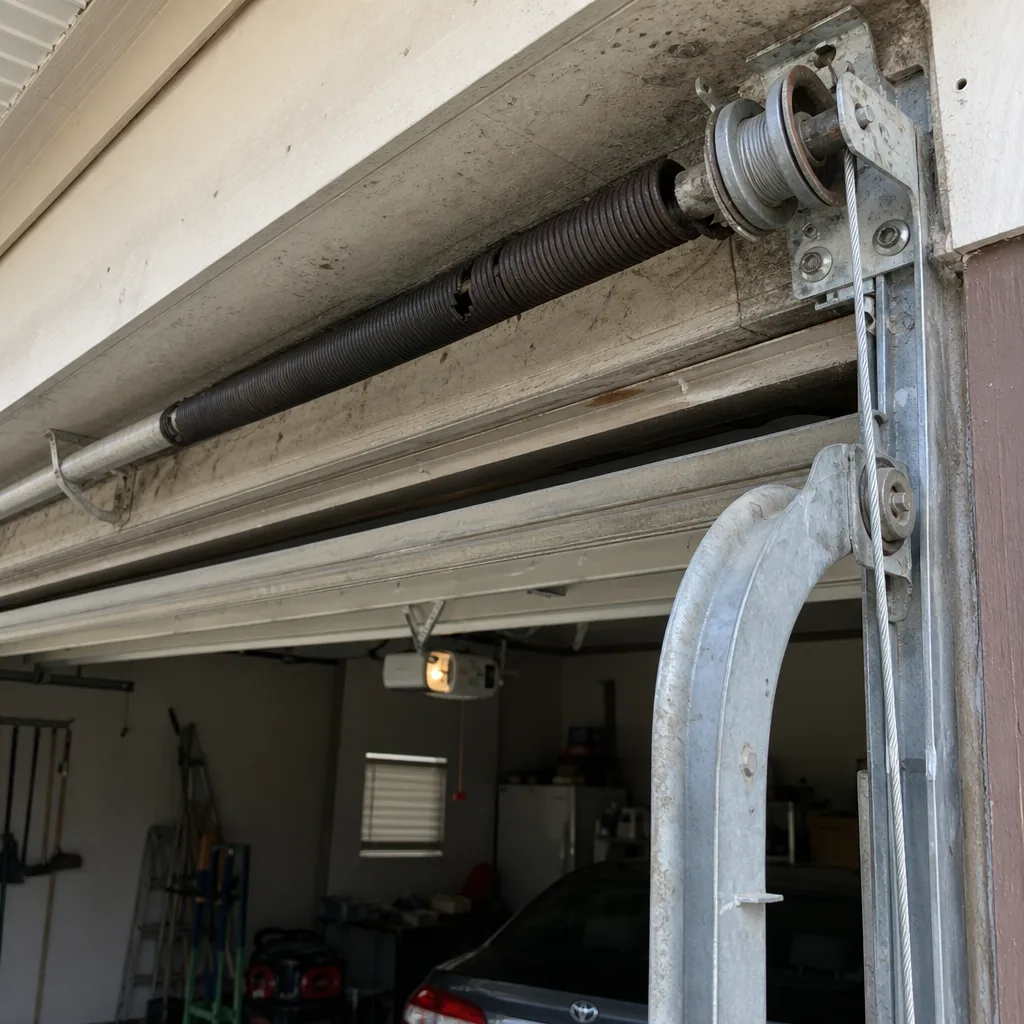 Before
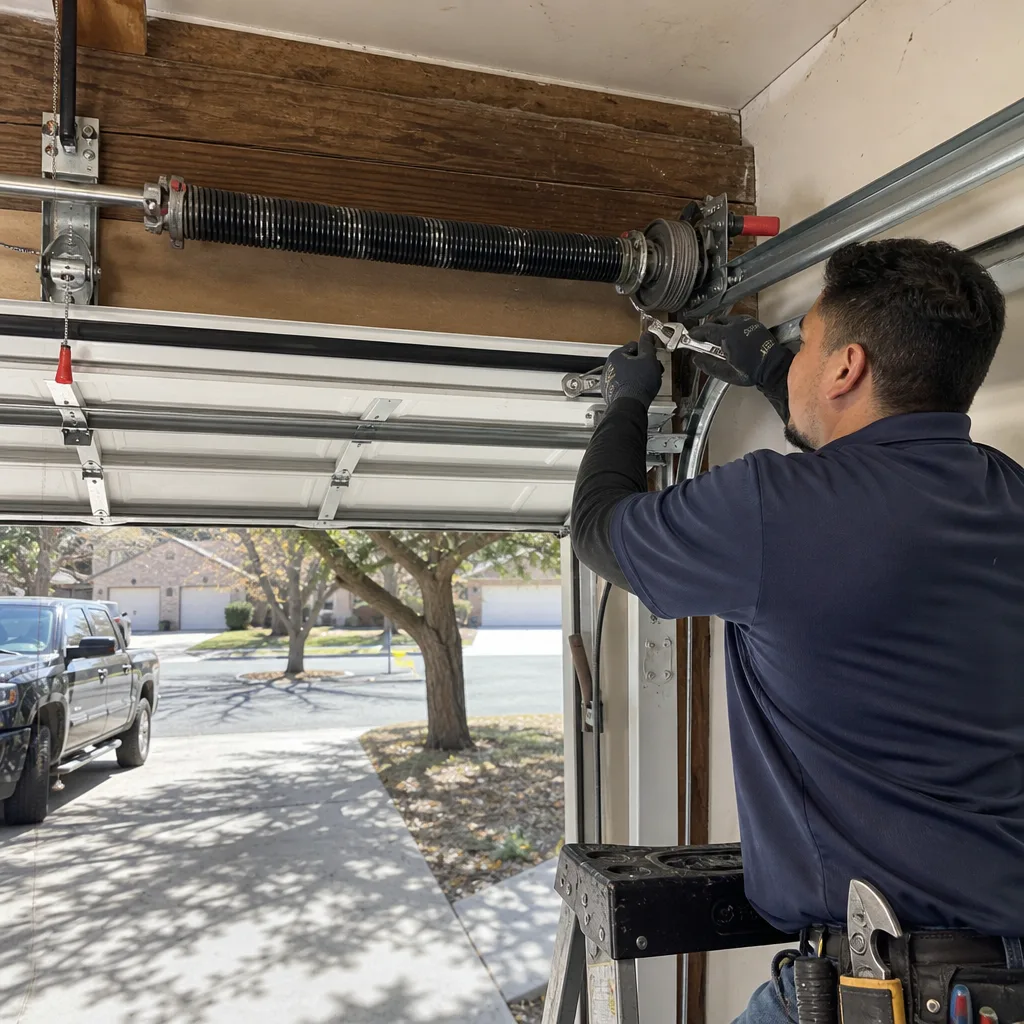 After
After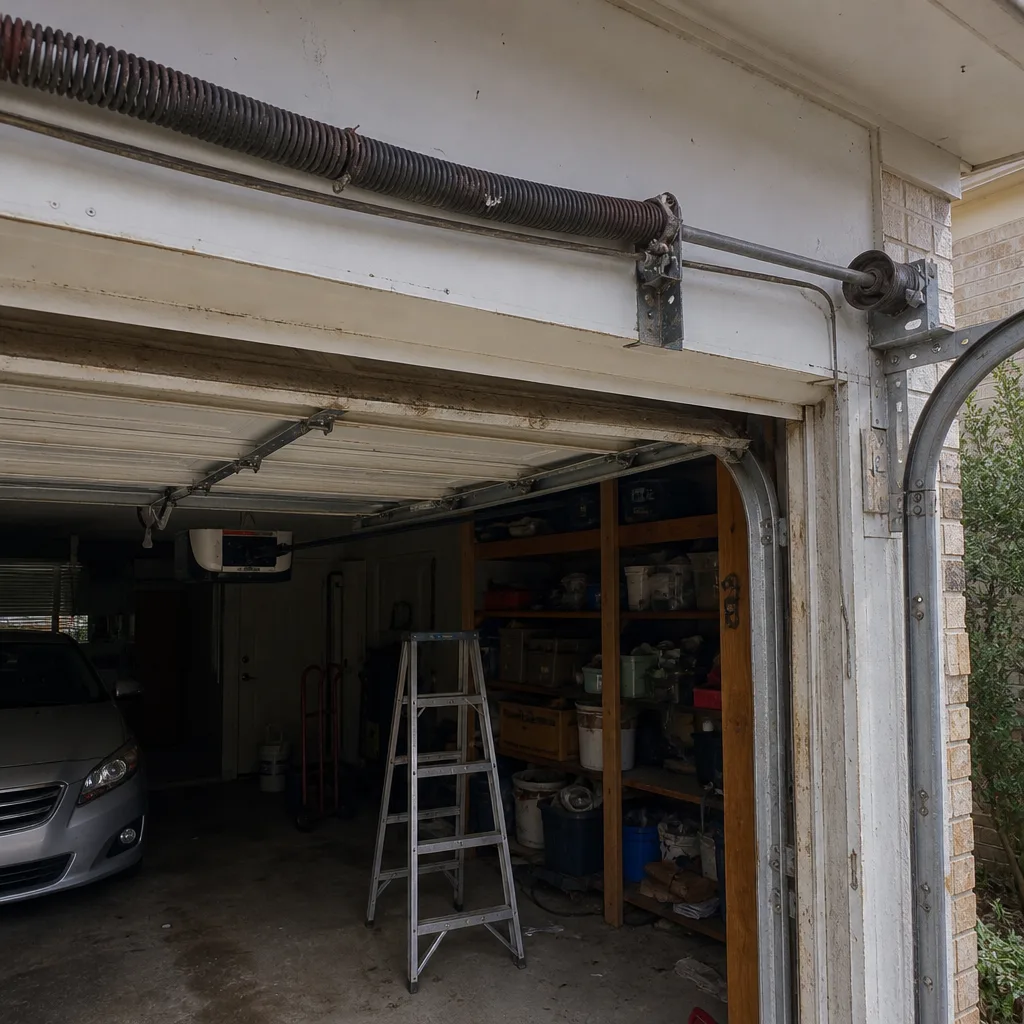 Before
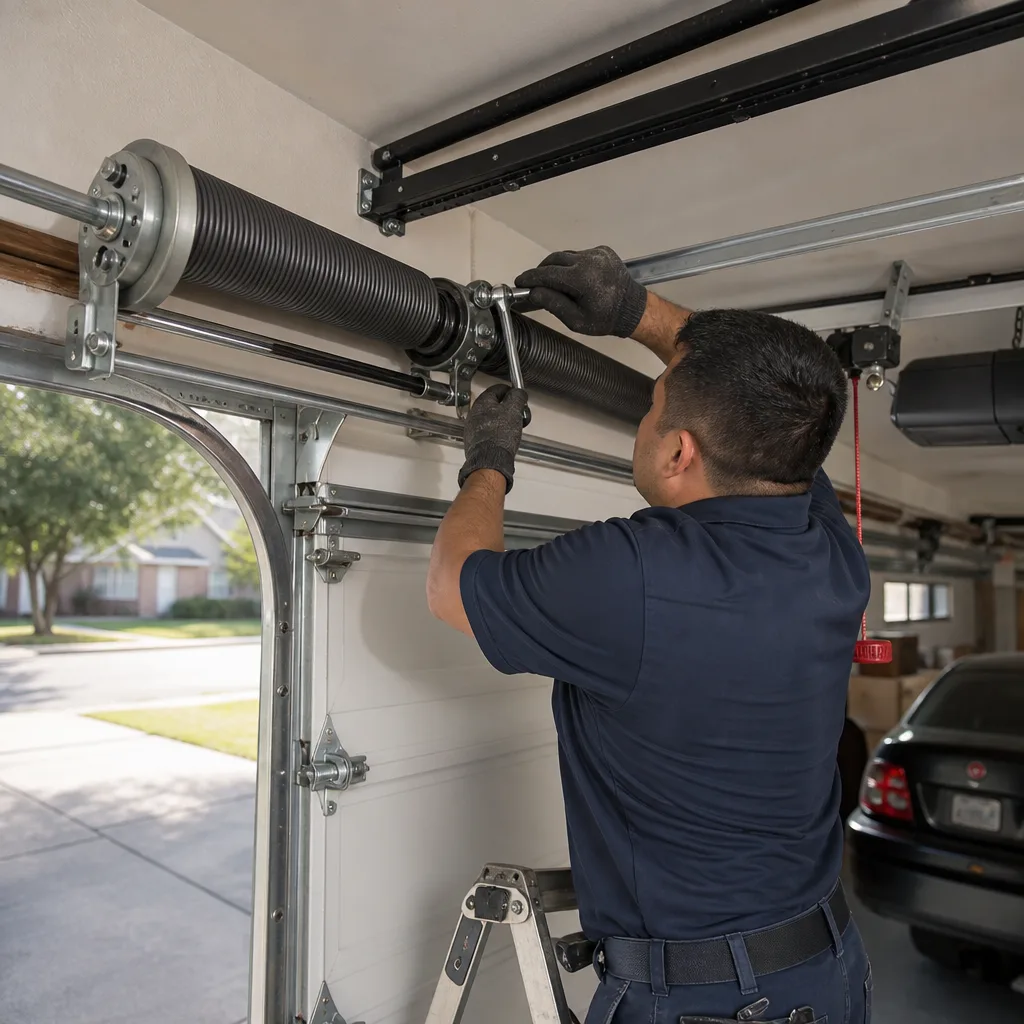 After
AfterFrequently Asked Questions
Garage door spring repair in San Antonio typically costs $180 to $340 for a standard two-car door, including the spring and labor. The range depends on spring wire size, door weight, and whether one or both springs are replaced. We recommend replacing both springs on a double door even if only one has snapped, because both have the same wear history. Call (806) 491-1594 for an exact quote. The price is written down and handed to you before any work starts.
Before a torsion spring snaps, you’ll usually hear a louder creak or groan during the last few weeks, especially when the door first starts moving. Some homeowners also report a faint popping sound as individual coils separate. The snap itself is a sharp crack like a gunshot, often followed by the door refusing to lift. If your door is getting louder, don’t wait for the snap.
You can, but you shouldn’t. The opener can physically lift the door without spring assistance, but it’s straining the motor and the door is now an uncontrolled 150-pound weight. If the door releases mid-travel, it will drop. Disconnect the opener by pulling the emergency release and leave the door closed until a technician arrives. A real person answers our phone at (806) 491-1594, day, night, weekends, and holidays.
In San Antonio’s heat and humidity, a standard torsion spring lasts ten to twelve years, which is shorter than the national average of fifteen years. Factors that shorten lifespan include frequent cycling (more than four open-close cycles per day), lack of lubrication on the spring surface, and installing a spring rated for fewer than 10,000 cycles. If your door is ten years old and the spring has never been replaced, it’s on borrowed time.
A door that reverses for no apparent reason is usually a sensor issue: misalignment, a dirty lens, or direct sunlight hitting the receiving sensor. Check the sensor LED lights first. A blinking light means misalignment, which you can adjust yourself in about two minutes. If both lights are solid and the door still reverses, the logic board may be failing. That’s a technician call.
Estimates are free. We come out, inspect the door, and hand you a written price before any work begins. That price includes the repair, the parts, and the labor. If the door doesn’t need work, we tell you that and there’s no charge. Every repair also includes our 365-Day Done Right Promise: if it fails within 365 days from the date of repair, we come back and make it right at no charge.
The Bottom Line
Every garage door emergency in San Antonio announces itself weeks in advance. The seven-second lift test tells you about spring and trolley health. Door drift tells you about spring tension loss. The sounds your door makes, creak vs. squeal vs. click, each point to a specific component at a specific stage of failure. The visual signs on the spring, a coil gap, banded rust, a misaligned paint mark, are readable by any homeowner who knows what to look for. And the two-minute sensor check saves you a service call when the problem is just sunlight. Learn the signs, act on them early, and you’ll never be the person standing in the driveway at 7 a.m. wondering why the door won’t open. If you are that person, call us. We answer. We show up. We hand you a written price before we touch anything. For more guides & resources, visit our blog.
Written by Aaron Teague, Owner at Doyle Garage Doors San Antonio, serving San Antonio since 2001.