
Last updated October 16, 2026
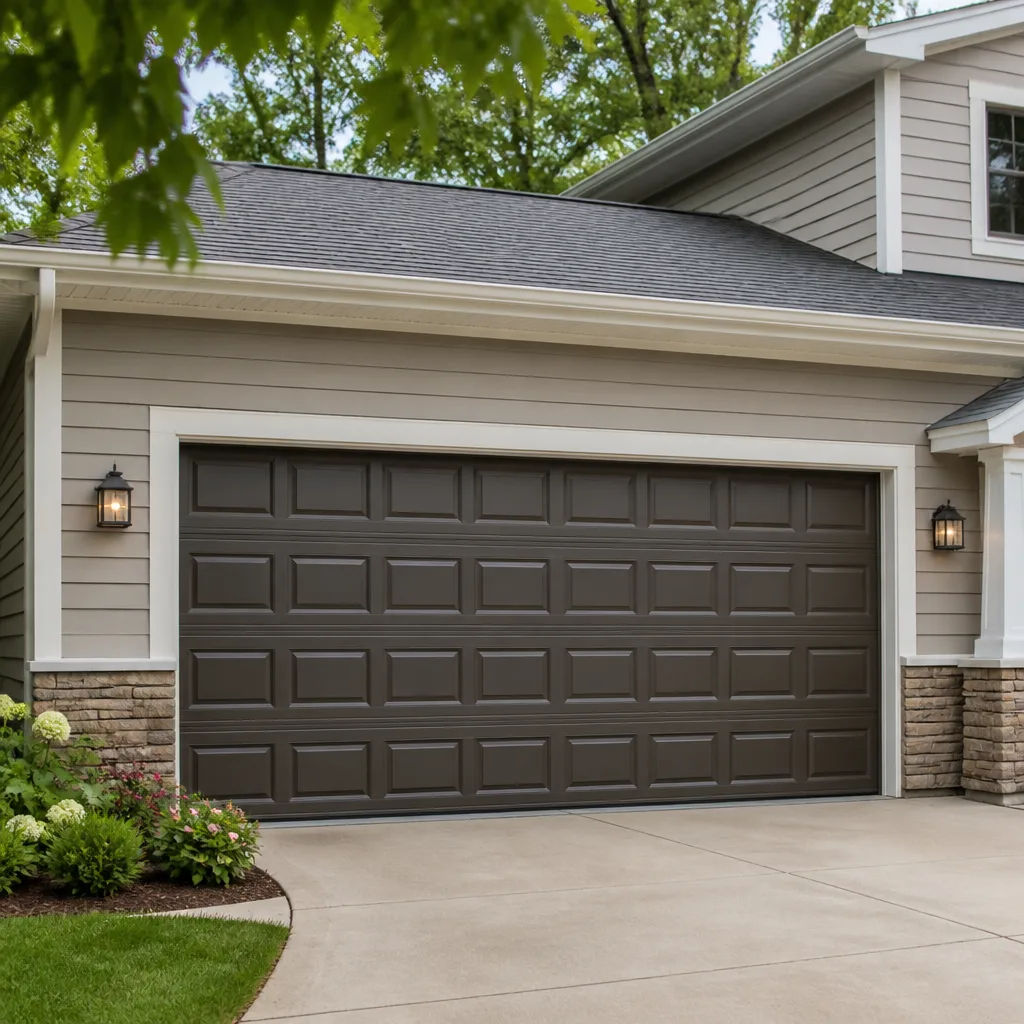 Raised-panel steel
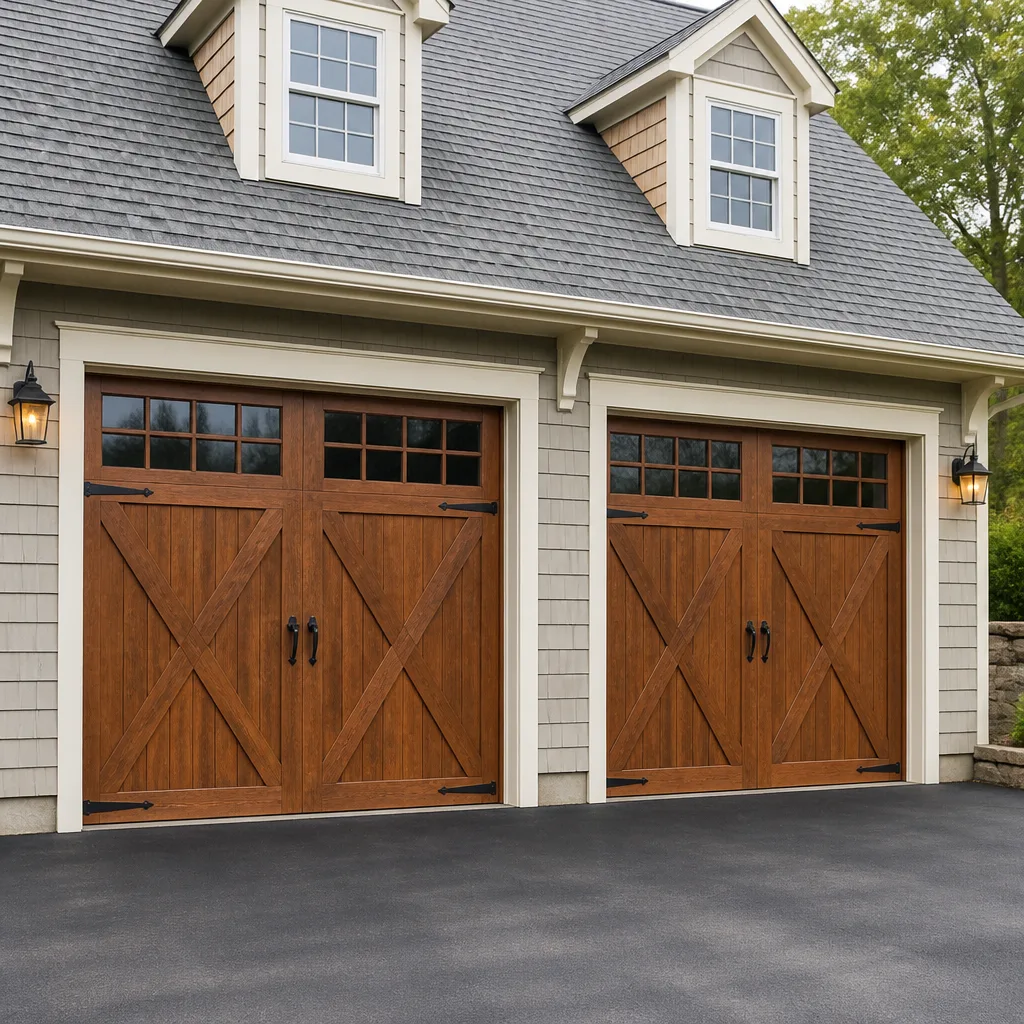 Carriage house
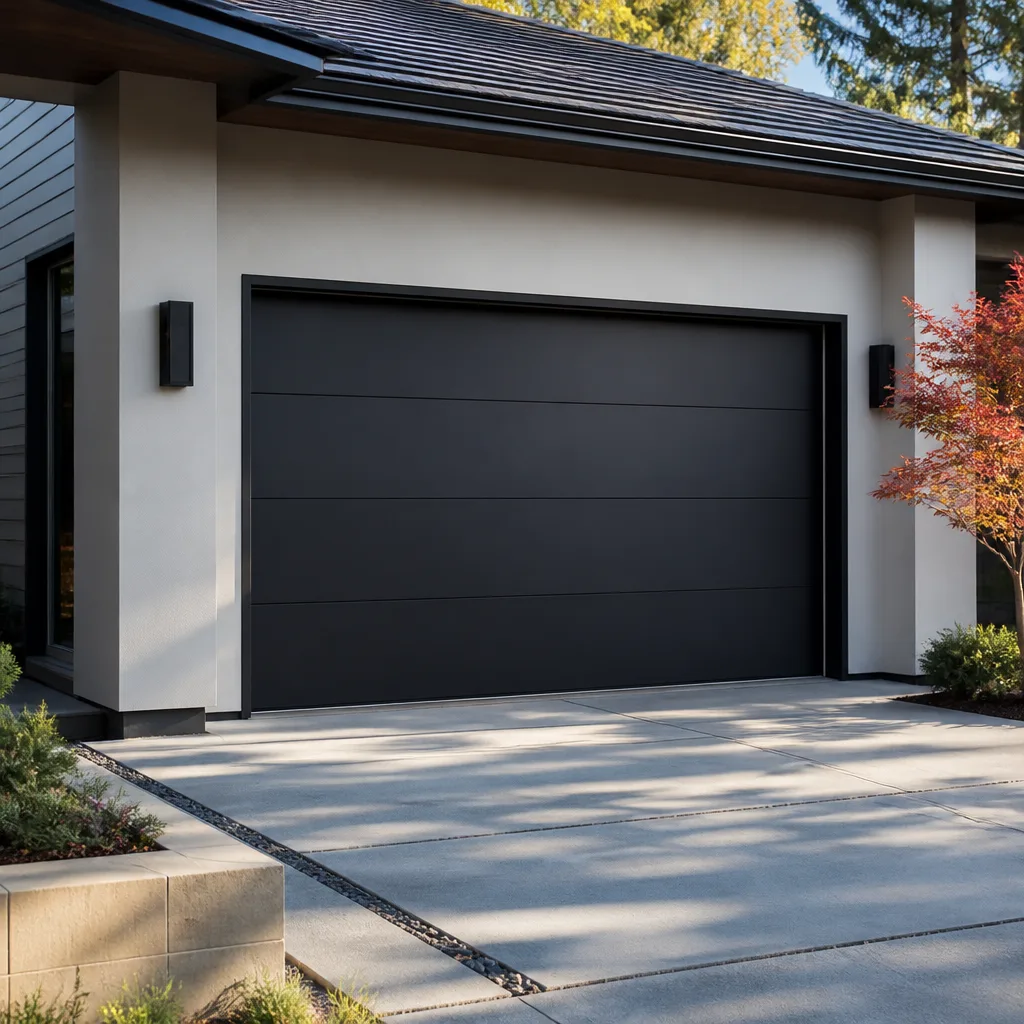 Modern flush
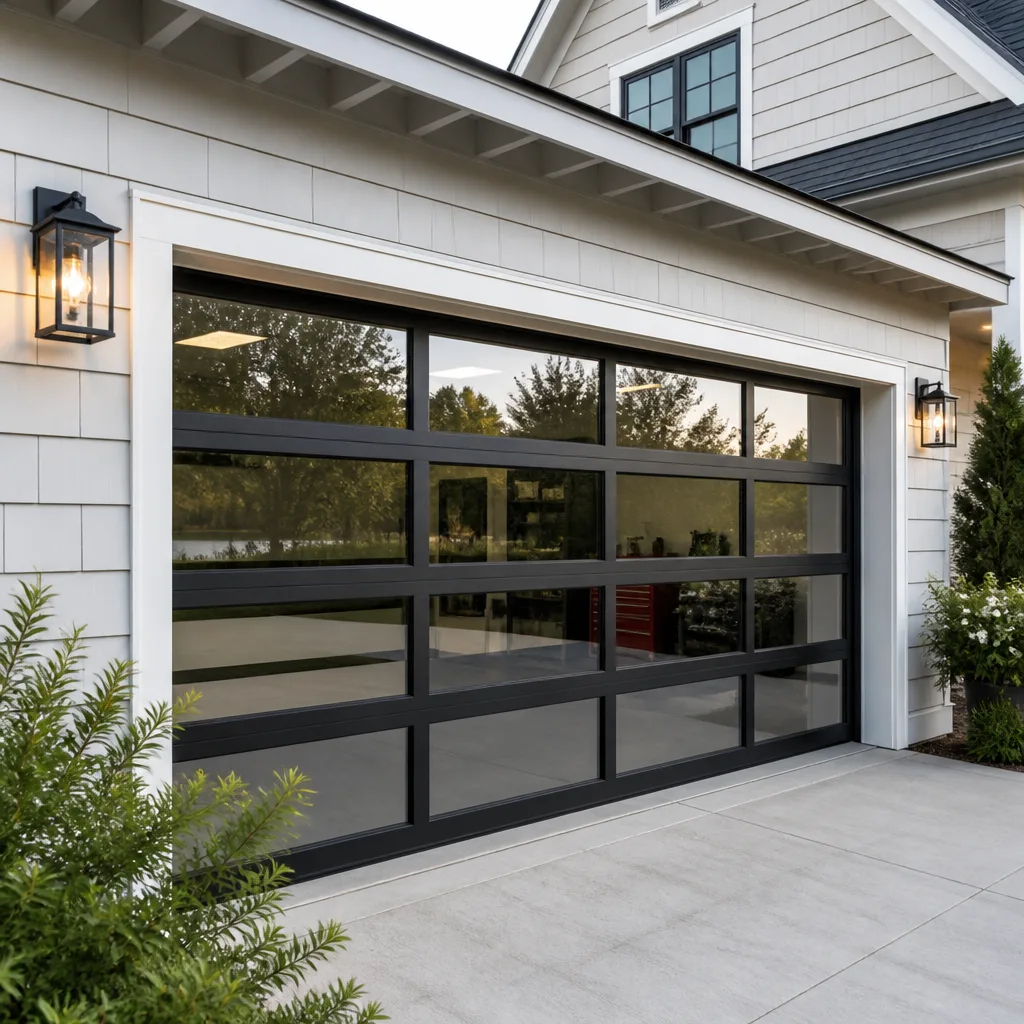 Full-view glass
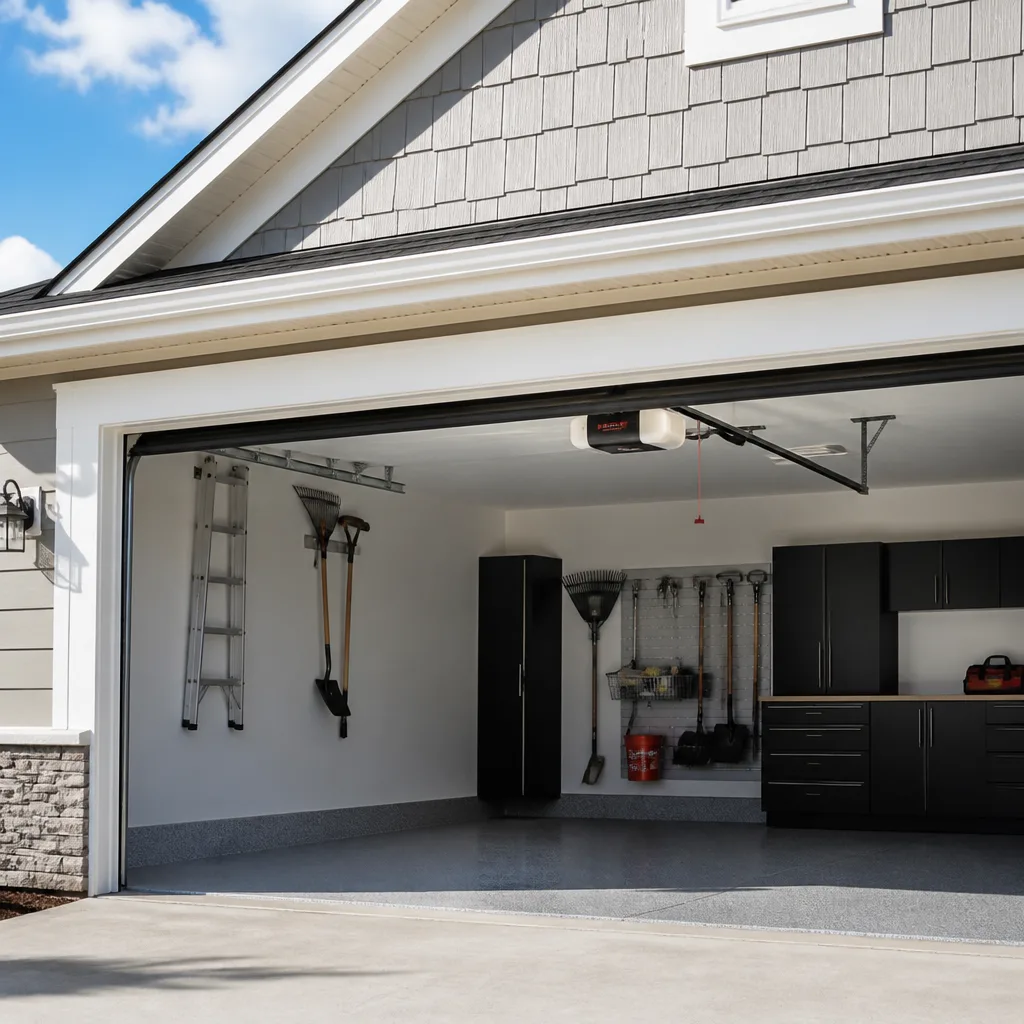 LiftMaster openers
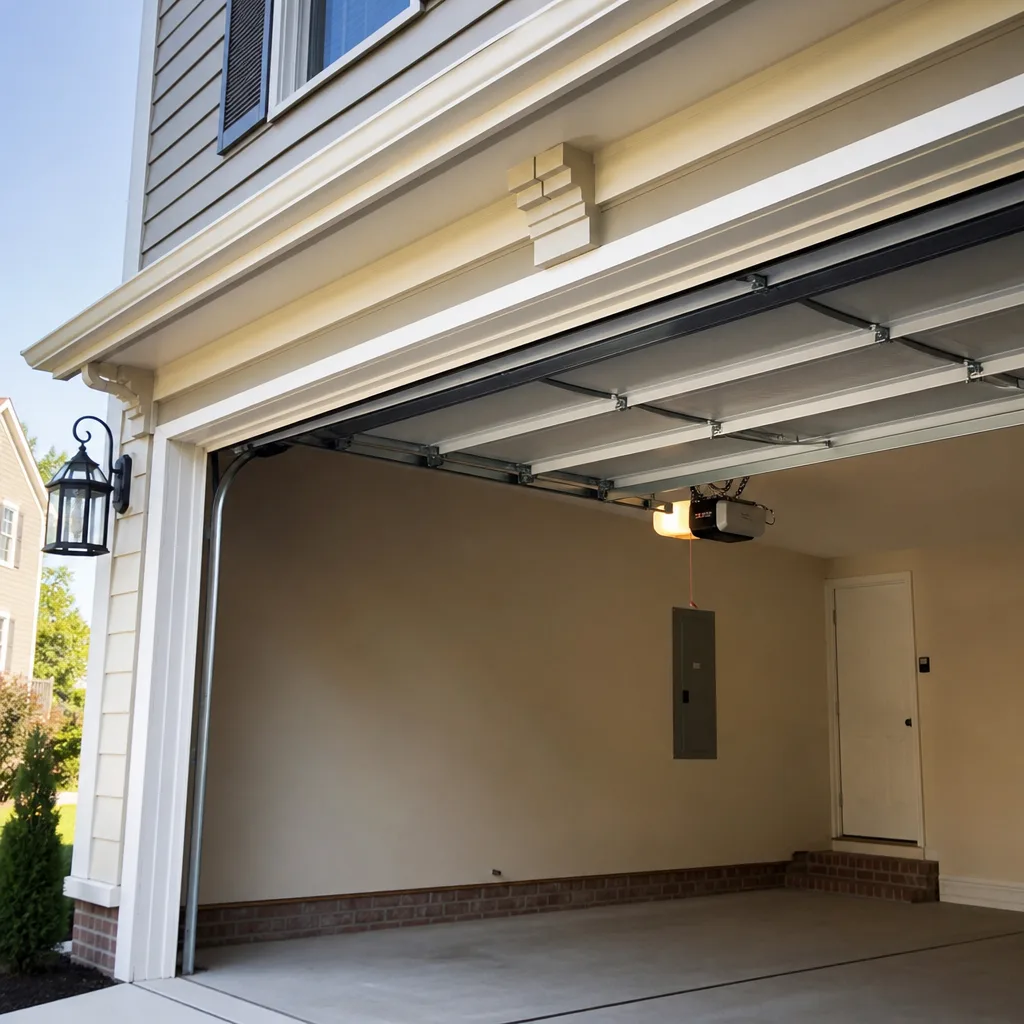 Chamberlain openers
Full 25-point door and opener safety check with every visit - springs, cables, rollers, tracks, and your LiftMaster or Chamberlain opener included
You get a price before we start. It does not change when the truck arrives.
Get your free estimateThe Complete Guide to Garage Door in San Antonio
San Antonio sits on caliche, a limestone-rich soil that swells and contracts with moisture far more dramatically than the sandy loam of Dallas or the granite-based ground around Austin. Pair that with more than 100 days a year above 90°F, and you have a city where garage doors fail in patterns that national guides never explain. This guide walks through how your garage door actually works in this climate, what breaks, what it costs to fix, and how to know when you need a pro versus a simple adjustment. For a deeper look at that decision, see our DIY vs Professional Garage Door: The San Antonio Homeowner’s Decision Guide. By the end, you’ll understand your door as a San Antonio-specific mechanical system rather than a generic home appliance.
Styles & brands we work with
Quick Answer
A garage door in San Antonio is a mechanical system under constant stress from heat expansion, caliche-driven foundation movement, and limestone dust contamination. The most common failures are torsion spring breakage (typically $180 to $340 to repair), roller and track wear, opener limit switch drift, and misaligned safety sensors. Most repairs take under two hours when the technician carries the right parts, and the single most cost-saving habit is an annual tune-up before peak summer heat arrives.
Table of Contents
- How a Garage Door Works: The San Antonio Reality
- Torsion Springs: The Part That Does the Heavy Lifting
- Caliche Soil and Foundation Movement: Why Your Door Goes Out of Square
- Heat, UV, and Steel Panels: What a San Antonio Summer Does to a Door
- Limestone Dust, Pollen, and Opener Wear
- Choosing Materials That Survive San Antonio
- Permits and Codes: San Antonio, Bexar County, and Suburbs
- The Seasonal Maintenance Checklist That Actually Matters
- Common Mistakes to Avoid
- When to Call a Professional
- Frequently Asked Questions
- The Bottom Line
How a Garage Door Works: The San Antonio Reality
A residential garage door is a counterbalanced system. The door itself, whether 16 feet wide or 8 feet wide, weighs between 130 and 400 pounds depending on material and insulation. A human cannot lift that comfortably. The torsion spring – the large coil mounted horizontally above the door opening – stores mechanical energy by twisting under tension. When you open the door, the spring unwinds and releases that stored energy to do most of the lifting. When you close it, the spring winds back up.
The parts that translate all this energy are straightforward once you know the names. The trolley carriage is the sliding block on the opener rail that pulls or pushes the door arm. The limit switches inside the opener tell the motor when to stop – one for fully open, one for fully closed. The photo eyes are the small sensors mounted about six inches off the floor on either side of the opening. They project an invisible beam. If that beam breaks, the door will not close. The cables run along each side and connect the bottom corners of the door to the spring shaft. The rollers ride in the vertical and horizontal tracks, guiding the door through its full arc.
Here is the San Antonio-specific part. Every one of those components expands and contracts with temperature. A standard steel panel grows by roughly a quarter inch on a 100-degree afternoon versus a 40-degree winter morning. That movement loosens fasteners, shifts track alignment, and alters the tension relationship between the spring and the door’s weight. In milder climates, an annual tune-up is a suggestion. In San Antonio, it is closer to a mechanical necessity. We see doors that worked perfectly in October binding by June simply because nobody rechecked the track spacing after a full thermal cycle season.
If your door is already acting up, our Garage Door Repair in San Antonio page explains the repair process step by step, including what a technician checks on a first visit.
Torsion Springs: The Part That Does the Heavy Lifting
Torsion springs are rated in cycles. One full open and close is one cycle. The springs installed on most San Antonio homes built in the 1990s and 2000s are rated for 10,000 cycles, which translates to somewhere between 7 and 12 years of normal use. When a spring reaches the end of its cycle life, it does not degrade gracefully. It snaps, usually when the door is closed, with a sound homeowners describe as a gunshot or a car backfiring. That snap is the spring releasing all its stored tension at once.
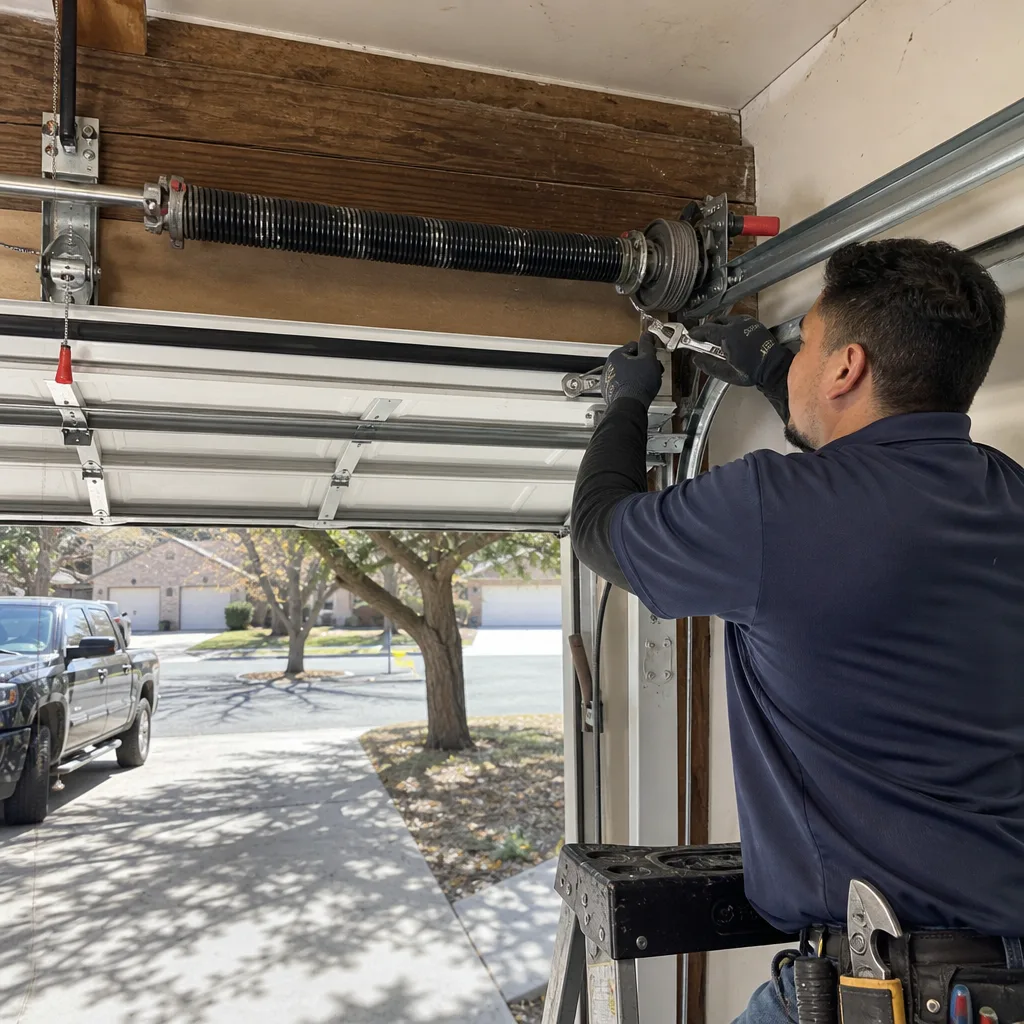
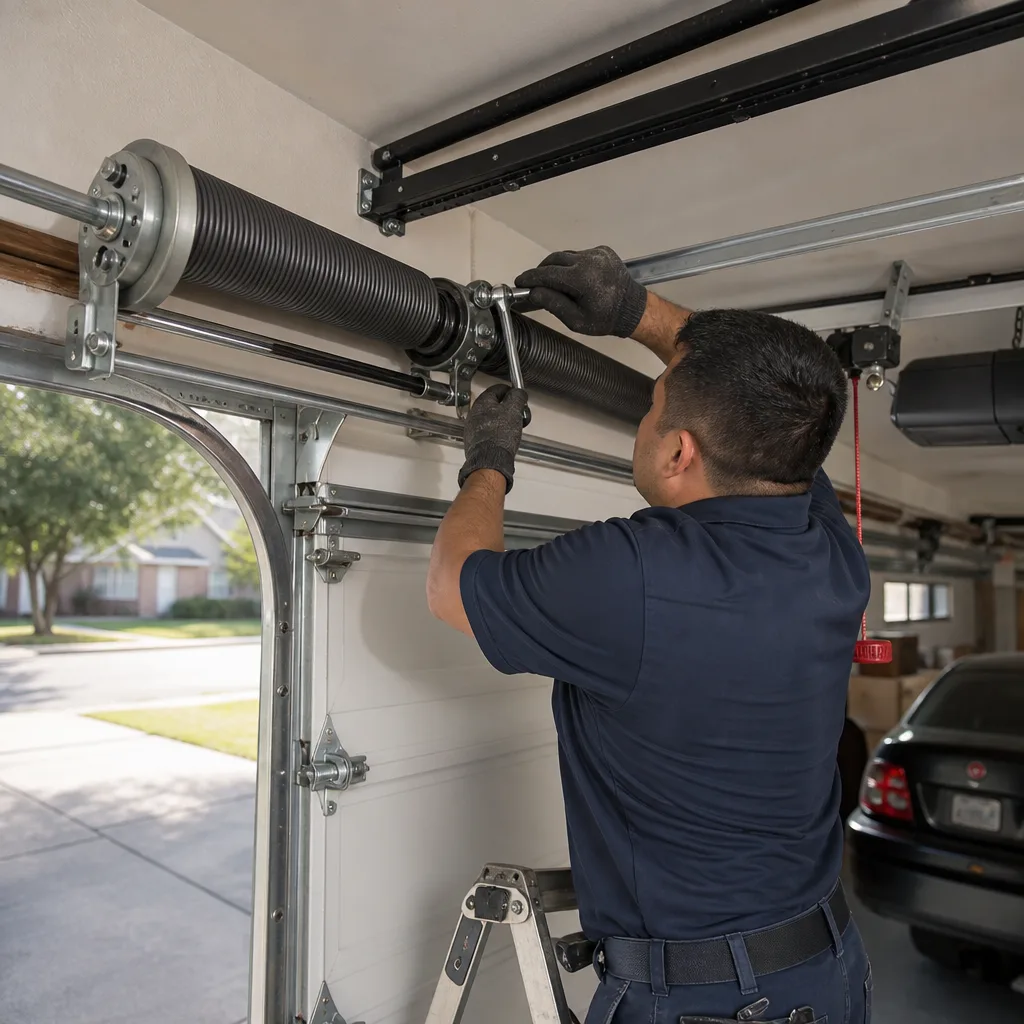
You cannot and should not repair a broken torsion spring yourself. The torque involved is enough to cause severe injury. This is not a “watch a video and save a few dollars” situation, and any guide that suggests otherwise is irresponsible. A trained technician uses winding bars sized specifically for the spring’s inner diameter, and the entire process requires the door to be braced in the open position first. If you hear that snap sound or find a visible two-piece gap in the spring above your door, leave the door closed or brace it open and call a professional.
In San Antonio, torsion spring replacement typically runs $180 to $340 for a standard two-spring setup on a single-car door, and $250 to $450 for a double-car door. For a full breakdown of material and labor costs, see our Garage Door Cost Breakdown: The San Antonio Homeowner’s Reference for 2026. The range reflects spring wire diameter, cycle rating, and whether the technician replaces both springs at once. You should replace both at once even if only one broke. The untouched spring has the same cycle count as the one that failed, which means it is days or weeks behind it. Paying for one spring now and one spring next month costs more than doing both in a single visit.
For the opener side of the equation, our Garage Door Opener Repair in San Antonio page covers what goes wrong with motors, remotes, and logic boards separately.
Caliche Soil and Foundation Movement: Why Your Door Goes Out of Square
Caliche is a sedimentary rock formed when calcium carbonate cements soil particles together. It exists in layers under much of Bexar County, and it does not absorb water evenly. During dry periods, caliche contracts and hardens. After heavy rain, it expands. Over years, this cycle causes slabs to shift by fractions of an inch – often not enough to crack a tile floor, but more than enough to throw a garage door out of alignment.
Here is what happens mechanically. Your garage door tracks are fastened to the walls and the header. Your garage floor is a separate concrete pour from the home’s foundation, but they sit on the same soil. When the slab shifts, the floor under the door changes its angle relative to the tracks. The door jams. The bottom seal – the rubber strip along the lower edge – stops meeting the floor evenly. You get a gap on one side. Cold air, dust, leaves, beetles, and the occasional scorpion now have a clear path into your garage.
A foundation gap at the bottom seal is often misdiagnosed as a weatherstripping failure. Sometimes it is. But if you replace the seal and the gap returns within weeks, or if the gap changes width between wet and dry seasons, the soil under the slab is moving. The fix is not a new door. The fix is track adjustment, and in more serious cases, sloping the floor section under the door with a concrete overlay. A technician who knows San Antonio will check for this pattern before selling you anything. Those unfamiliar with local soil often replace the seal and leave, and the homeowner spends money twice.
We have watched this exact cycle play out in neighborhoods like Stone Oak, where caliche is close to the surface, and in older Helotes homes where the slab has had decades to shift. The door is rarely the root cause. The ground beneath it usually is.
Heat, UV, and Steel Panels: What a San Antonio Summer Does to a Door
The thermal load in San Antonio is not just uncomfortable for people. It changes the physical dimensions of your garage door every single day. Steel expands at roughly 0.0000065 inches per inch per degree Fahrenheit. A 16-foot panel that is 40°F on a winter morning and 110°F on a summer afternoon changes by nearly a quarter inch. That expansion pushes against hinges, stretches the tension rods, and pulls on the fasteners that hold the track brackets to the wall.
Over one season, that is a small cumulative effect. Over five seasons, the effect compounds. We regularly see doors in older neighborhoods like Castle Hills and Jefferson where the hinge bolts have wallowed out their holes by an eighth of an inch. The door rattles when it moves. The panels flex more than they should. The opener works harder. Every component wears faster.
UV exposure is a second, separate problem, and it is directional. A south-facing garage door in San Antonio takes direct sunlight from late morning to early evening every day of the year. That exposure breaks down the paint or powder coat finish. Dark doors fade unevenly, especially on the lower panel, which also catches radiant heat from the driveway. Steel doors with a polyester topcoat start looking chalky within four to five years on a south-facing home. The same door on a north-facing home lasts twice as long cosmetically.
Composite and fiberglass doors resist fading better than steel, but they carry their own heat distortion issues. Aluminum doors with a factory-applied fluoropolymer finish hold up well under UV but dent easily. The practical answer for most San Antonio homeowners is a steel door with a polyurethane foam core and a factory finish rated for high-UV exposure, which most major manufacturers including Clopay and Amarr now offer as a standard option.
Limestone Dust, Pollen, and Opener Wear
San Antonio has two airborne irritants that shorten the life of garage door openers and hardware: limestone dust from the caliche and local quarry operations, and cedar pollen, which spikes every winter and again in early spring. Both are fine enough to infiltrate the opener housing, and both mix with the factory grease on the trolley carriage to form a gritty paste.
The trolley carriage slides along a metal rail every time the door opens or closes. When that rail is coated with contaminated grease, the carriage grinds instead of sliding. You hear a groaning or chattering noise during operation. The opener motor strains against the extra friction. Over time, the limit switches drift because the motor encounters different resistance at different points in the travel, and the opener starts opening the door too far or not far enough.
The fix is straightforward and preventative. The rail should be cleaned and re-lubricated with a lithium-based grease designed specifically for garage door openers. Do not use WD-40 as lubrication. It is a solvent that removes existing grease and leaves the rail drier than before. The inspection interval for San Antonio should be every six months, not the annual interval recommended for most of the country. If you live near a quarry operation – there are active limestone mines on the city’s north and east sides – check every four months.
We also recommend vacuuming the interior of the opener housing once a year. Dust that settles on the logic board and gears accelerates wear on the plastic drive components that are expensive to replace. It is a five-minute task that prevents a $200 repair.
Choosing Materials That Survive San Antonio
Every material has a tradeoff in this climate. The right choice depends on whether your door faces south, whether your garage is attached or detached, and what you actually use the garage for beyond parking.
Steel (24-gauge or 26-gauge) is the most common and the most practical for most San Antonio homes. It holds up to hail better than aluminum, it can be insulated, and replacement panels are widely available. The weakness is heat transfer and finish degradation on sun-exposed faces. A 24-gauge steel door with a polyurethane core and a factory finish rated for high UV will serve most homes well. Lighter 28-gauge steel is cheaper but dents too easily for hail-prone San Antonio neighborhoods.
Aluminum is lighter and naturally rust-resistant, which matters in a climate with high humidity and occasional Gulf-driven storms. The tradeoff is dent resistance. A stray baseball or a ladder tip will leave a mark. Aluminum also transmits heat quickly, so uninsulated aluminum doors turn garages into ovens in July. Choose aluminum only with a foam core and a heavy frame, or treat it as a style decision for a garage that is not used as a workspace.
Composite and wood-look doors offer the best appearance retention. They do not fade like steel, they resist dents better than aluminum, and they do not warp the way real wood does in high humidity. The cost is higher, typically 30% to 50% over a comparable steel door. For a home in Alamo Heights or Terrell Hills where appearance is part of the market value, that premium often makes sense.
Real wood is rare in San Antonio garages for good reason. The humidity swings between summer and winter, combined with heat that dries out sealant quickly, cause real wood doors to warp within a few years unless they are maintained on a strict schedule. If you want the wood look, buy composite. If you already have real wood, plan on re-sealing it every 12 to 18 months.
For most homeowners, the smart choice is a steel door from a manufacturer like Clopay or Amarr, insulated, with a high-UV factory finish. Our Garage Door Installation in San Antonio page covers measuring, ordering, and what the installation day actually looks like.
Permits and Codes: San Antonio, Bexar County, and Suburbs
The permit landscape in the San Antonio metro is not uniform. It varies by jurisdiction, and knowing the difference can save you from a code violation, a failed home inspection when you sell, or a fine. For complete details, read our guide to Garage Door Permits, Codes & Inspections in TX: What You Need to Know.
Within the City of San Antonio proper, a permit is required for a new garage door installation when the door is part of a broader structural change – for example, if you are enlarging the opening or converting a carport to a garage. A straightforward replacement where the opening size does not change generally does not require a permit. The same applies to spring replacement, opener installation, and track repair, which are classified as maintenance or minor repair work.
Unincorporated Bexar County follows a more permissive approach. Most garage door work on a single-family home does not require a county permit as long as the work does not alter the structure. However, if you live in an incorporated suburb like Converse, Schertz, or Universal City, the local municipal code may differ. Some suburbs require a permit for any new door installation regardless of whether the opening changes. Others follow the San Antonio model.
The practical rule for homeowners: if you are replacing a door in an existing opening, you almost certainly do not need a permit in San Antonio proper or Bexar County. If you are changing the opening dimensions, adding a new opening, or building a garage addition, check with your local building department first. A reputable installer will know which jurisdiction you are in and will tell you if a permit applies before starting work.
The Seasonal Maintenance Checklist That Actually Matters
Most garage door maintenance lists are padded with tasks that do not move the needle. In San Antonio, there are six things that actually prevent breakdowns. Do these twice a year, once in early spring and once in early fall. For more guides & resources on keeping your door running, visit our blog.
- Clean and re-lubricate the opener rail. Wipe the old grease off with a rag, then apply lithium-based grease to the rail. This is the single most effective thing you can do for opener longevity in San Antonio’s dust-heavy air.
- Check the balance of the door. Disconnect the opener with the release handle (the red cord hanging from the rail), then manually lift the door to the halfway point. If it stays in place, the springs are correctly tensioned. If it falls or rises, the springs need adjustment. Do not adjust torsion springs yourself. A falling door means the spring tension is too low, and the door is unsafe.
- Inspect the rollers and hinges. Look for cracked nylon rollers, loose hinge bolts, and elongated holes where bolts have worked themselves loose. Replace any roller that does not spin freely.
- Check the photo eyes. Make sure the beam is aligned and unobstructed. Clean the lenses with a dry cloth. A misaligned beam will stop the door from closing, which is a safety feature, not a malfunction, but it is still the most common house call we make.
- Examine the bottom seal. Look for gaps where light passes under the door. If the gap is even across the width, replace the seal. If it is uneven, you may have a slab movement issue, and the door needs to be evaluated by someone who understands caliche.
- Tighten all track bolts and brackets. Use a socket wrench and check every visible fastener. Heat expansion loosens these over time, and a loose track is the precursor to a derailed door.
Common Mistakes to Avoid
- Ignoring a noisy door until it stops working. A grinding sound from the rail or a squeak from the springs is a warning, not a personality quirk. Addressing the noise early usually costs a service call. Waiting until failure costs a spring or a motor.
- Using WD-40 or motor oil on the opener rail. WD-40 is a solvent. It strips grease and makes the grinding worse. Motor oil is too thin and slings off. Use lithium-based garage door grease.
- Replacing only one spring when one breaks. Both springs wear at the same rate. The untouched spring is a few weeks behind the broken one. Replace both and save yourself a second service call and a second trip charge.
- Disconnecting the opener while the door is fully open. With the opener disconnected, a door with weak springs will slam shut under its own weight. Always disconnect only when the door is closed, or after bracing it in the open position.
- Adjusting the photo eyes without checking the track first. Sometimes the sensors are fine and the track has shifted, which changes the beam angle. Straightening the track may be the actual fix.
- Replacing a bottom seal on a door that is out of square. If the slab has shifted, the new seal will not meet the floor evenly. The gap will return. Fix the alignment issue first.
- Buying a cheap spring kit online and attempting a DIY replacement. Torsion springs hold enough stored energy to break bone. This is the one repair on the list where the cost of a professional is not negotiable.
When to Call a Professional
Call a professional if your torsion spring has broken, if your door has come off its tracks, if the opener motor runs but the door does not move, or if the door slams shut when you pull the release handle. These are not tune-up issues. They require a technician with the right tools, and in the case of spring and cable work, the right safety equipment.
You should also call if you have adjusted the photo eyes, cleaned the rail, and checked the balance, and the door still misbehaves. Persistent problems usually point to a root cause that is not visible from the outside. Doyle Garage Doors San Antonio home has served San Antonio since 2001 with a team led by Aaron Teague, and every job includes a written price before work begins. Call (806) 491-1594 for a free estimate.
Frequently Asked Questions
Most common repairs in San Antonio run between $120 and $450, with torsion spring replacement at $180 to $340 for a single door and $250 to $450 for a double door. Opener rail cleaning and sensor realignment are usually $90 to $150. Track repair runs $150 to $300 depending on whether replacement parts are needed. Every price is provided in writing before work starts. Call (806) 491-1594 for an exact quote on your specific door.
In most cases, yes. We stock common parts for all major brands including LiftMaster, Chamberlain, Genie, and Craftsman on our trucks, so the majority of spring replacements, opener repairs, and sensor issues are resolved in a single visit. Emergency calls are answered 24/7 by a live person, not a voicemail tree, including nights, weekends, and holidays. Call (806) 491-1594 and we will tell you over the phone whether same-day service is available in your neighborhood.
No. The price you are quoted is the price you pay, and it is handed to you in writing before any work begins. There are no hidden fees, no upsell pressure, and no invoice surprises. If the technician finds something unexpected that requires additional work, you will be given a new written quote and you decide before anything else is done.
Yes. Our trucks carry the most commonly needed parts across all major brands we service, including LiftMaster, Chamberlain, Raynor, and Genie. That means most repairs are completed in the first visit. If a specialized part is needed for a less common door, we order it and return to install it as soon as it arrives, always with the installation cost quoted upfront.
That is heat expansion. As the temperature climbs, the steel panels expand and the track spacing changes slightly, which causes the rollers to bind. The fix is usually a track adjustment and possible spring re-tensioning to accommodate the door’s expanded dimensions. This is one of the most common San Antonio-specific issues we see, especially on south-facing garages. Call (806) 491-1594 and we will tell you whether a tune-up will resolve it or whether you need something more involved.
Twice a year. The spring and fall tune-ups catch the wear patterns caused by summer heat expansion and winter humidity before they become failures. Our 365-Day Done Right Promise applies to every repair we make: if it fails within 365 days of the repair date, we come back and make it right at no charge. Call (806) 491-1594 to schedule.
The Bottom Line
A garage door in San Antonio is a system that lives in a harder environment than most guides acknowledge. Caliche soil shifts the floor, heat expands the panels, UV burns the finish, and limestone dust wears out the opener. The homeowners who get the longest life out of their doors treat them as San Antonio machines: twice-a-year lubrication, immediate attention to new noises, and professional handling of anything involving springs, cables, or track geometry. When you do need help, Garage Door Repair in San Antonio is one call away. Doyle Garage Doors San Antonio has been serving San Antonio since 2001, with written pricing before every job and a 365-day written guarantee on every repair.
Call (806) 491-1594 for a free estimate, answered by a real person, 24 hours a day, seven days a week.
Written by Aaron Teague, Owner at Doyle Garage Doors San Antonio, serving San Antonio since 2001.
See the difference
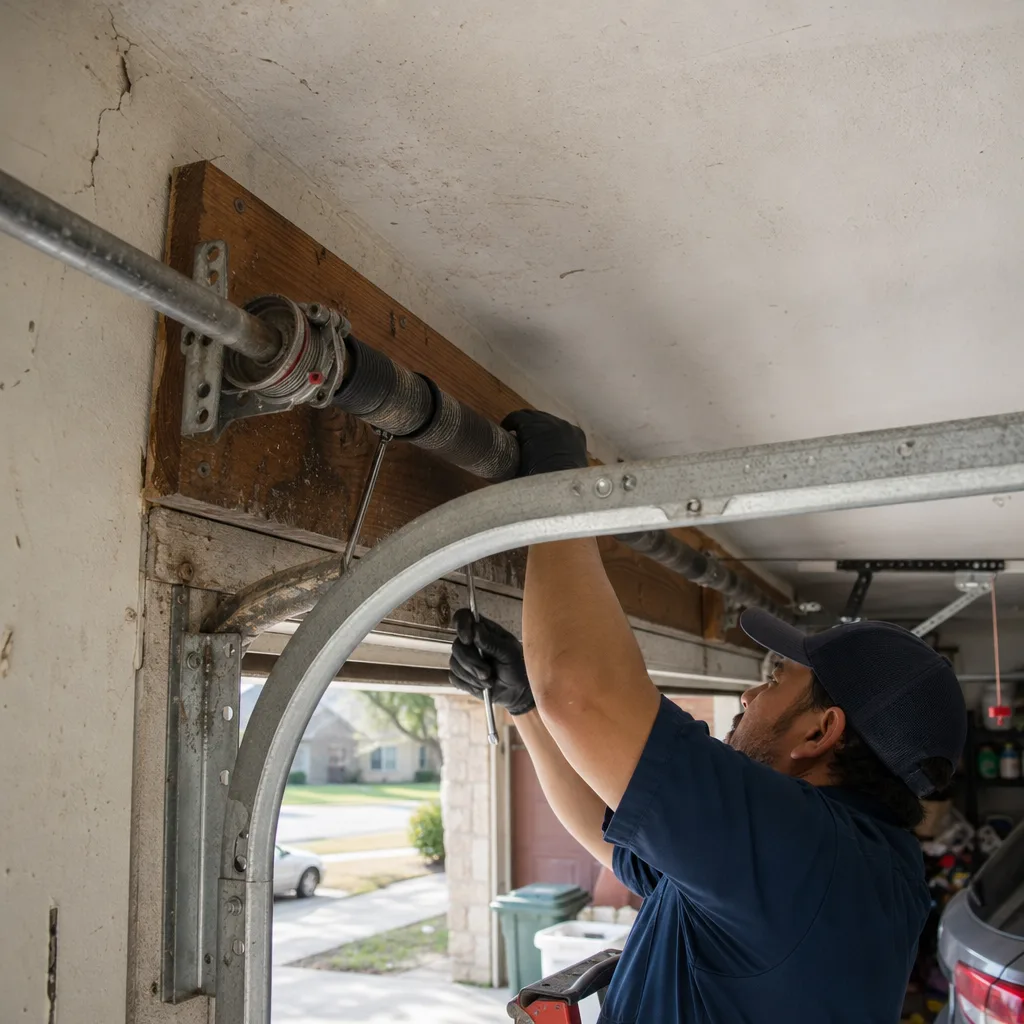 Before
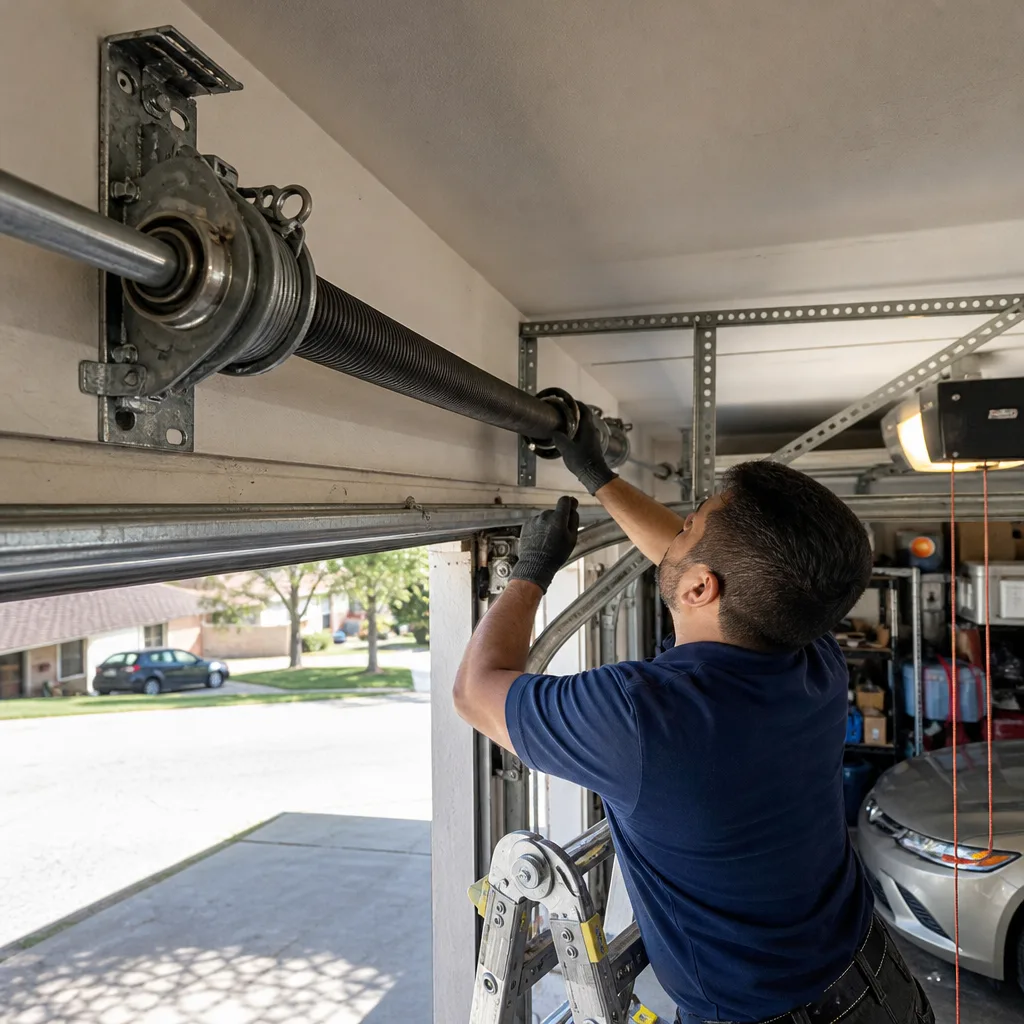 After
After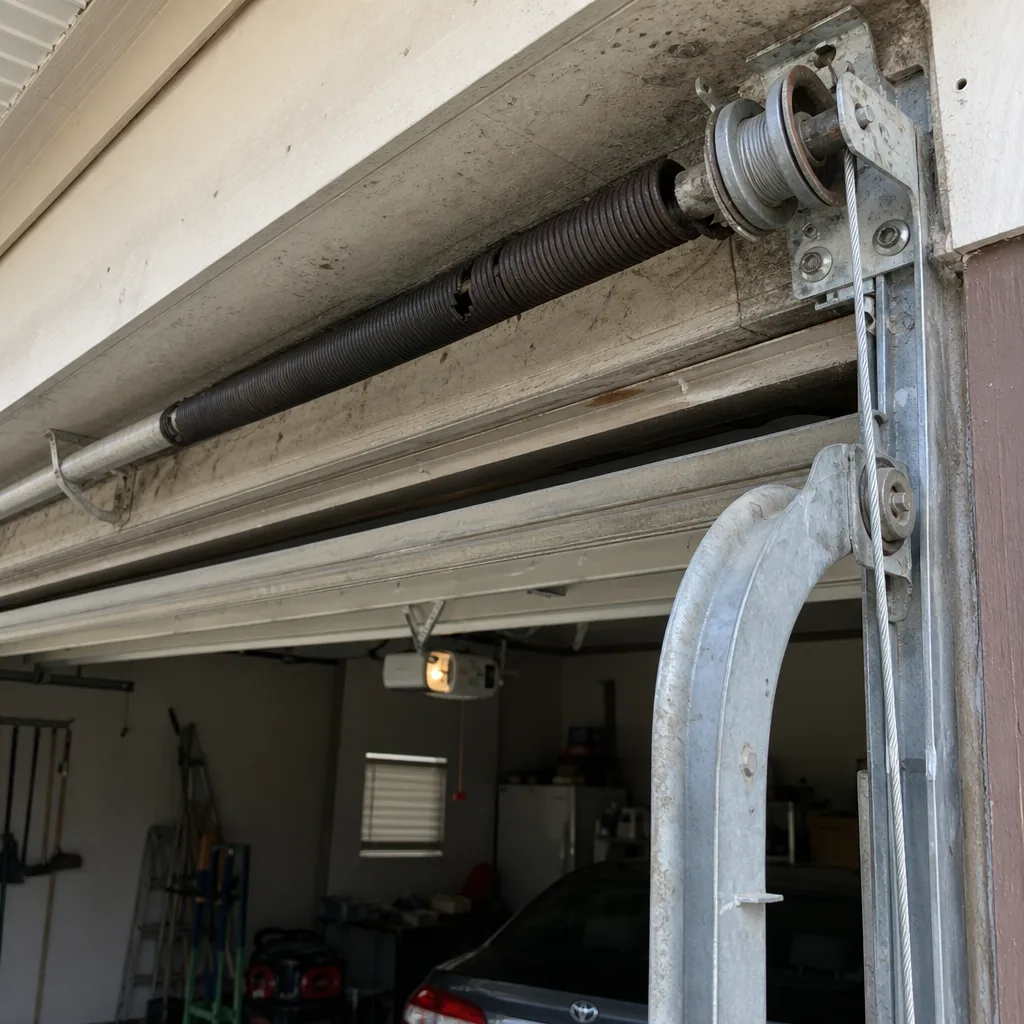 Before
 After
After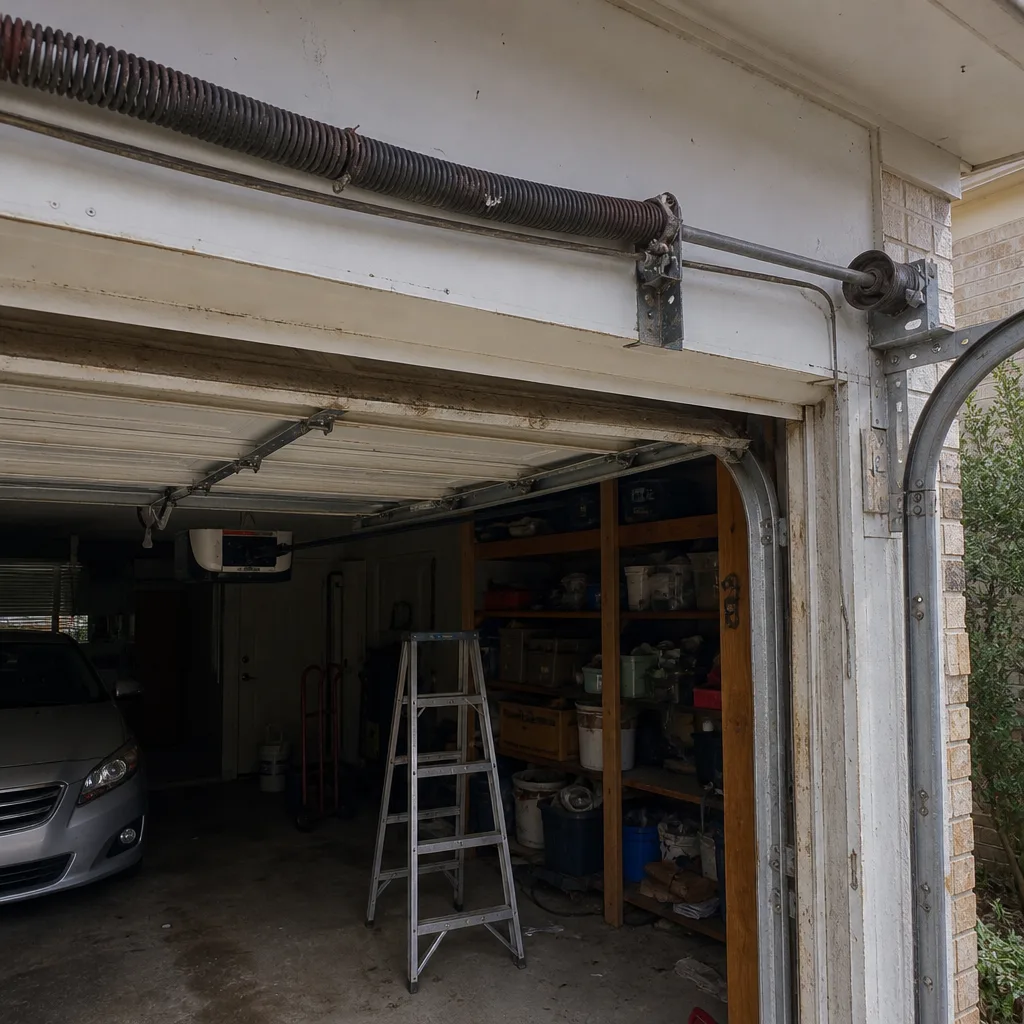 Before
 After
After